Steady Growth, But a Slower Pace
Passenger numbers across European airports rose 2.6% in the first six months of 2026 compared with the same period a year earlier, according to Airports Council International Europe. The increase reflects continued appetite for travel, even as higher jet fuel prices and ongoing conflict in the Middle East began to reshape airline schedules and route networks.
Growth was uneven across the two quarters. January through March saw a 4.3% jump in passengers, but April through June cooled to 1.3%. The slowdown coincided with reduced service to Middle Eastern destinations and capacity cuts by carriers adjusting to higher operating costs. For the first time since the industry rebounded from the pandemic, domestic flights outpaced international ones, with domestic traffic up 3% and cross-border travel up 2.5%.
The shift suggests travellers are opting for shorter trips within their own countries, possibly to avoid disruptions or to keep costs down. It also highlights how external pressures can quickly alter patterns that had seemed stable just months before.
Border System Becomes a Flashpoint
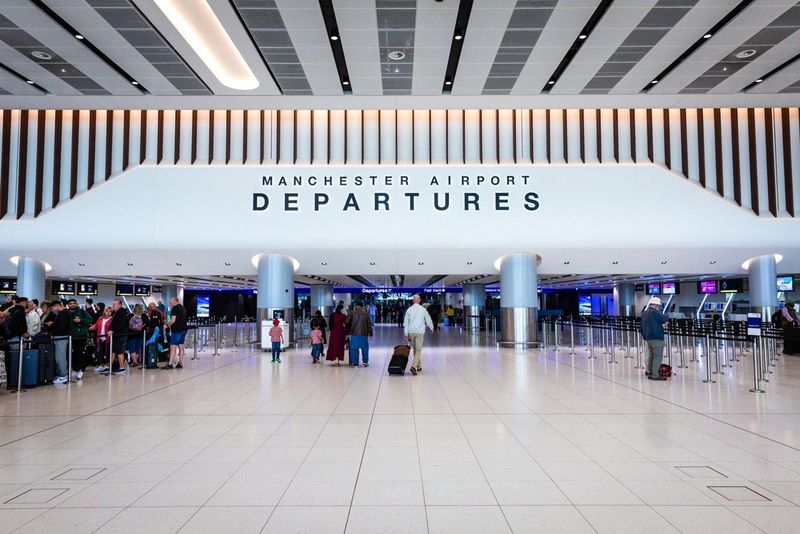
The European Union's Entry/Exit System, introduced to tighten border management by capturing biometric data from non-EU visitors, has become a source of frustration for airports and passengers alike. Long wait times at passport control have sparked complaints, and nine European countries have asked Brussels to allow temporary suspension of biometric checks during peak periods.
Olivier Jankovec, director general of ACI Europe, called fixing the system an immediate priority. He warned that unpredictable queues are starting to discourage travellers from visiting the continent. The European Commission has acknowledged the system still needs improvement but continues to defend it as a necessary security measure.
The tension between security goals and passenger experience is not new, but the scale of the disruption this summer has made it harder to ignore. Airports that rely on smooth processing to handle high volumes are now dealing with bottlenecks that ripple through their operations, delaying connecting flights and straining staff.
Where Growth Was Strongest
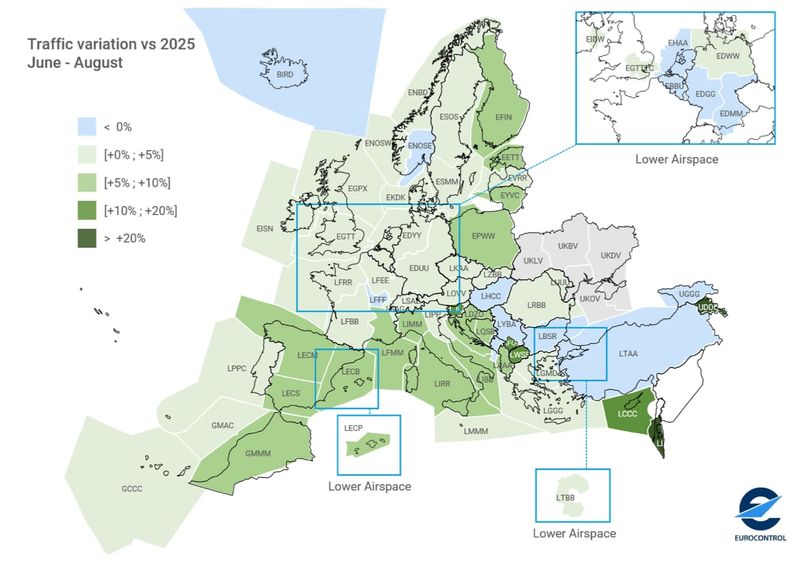
Smaller markets posted the most dramatic gains. Slovakia's passenger traffic more than doubled, up 101.3%, while Malta rose 15.6% and Slovenia 14.7%. Among larger countries, Italy climbed 4.2% and Spain 3.7%, benefiting from robust leisure travel and North American visitors.
Germany, by contrast, fell 1.2%, the weakest performance among major European markets. France and the United Kingdom each managed less than 1% growth. The divergence reflects both infrastructure constraints and differences in how quickly airlines have restored capacity in various regions.
Outside the European Union, North Macedonia, Moldova, and Albania all saw double-digit increases, driven by low-cost carrier expansion and growing connectivity. Israel, however, dropped 19.2%, a direct consequence of the conflict in the region.
Big Hubs Lag Behind Regional Airports
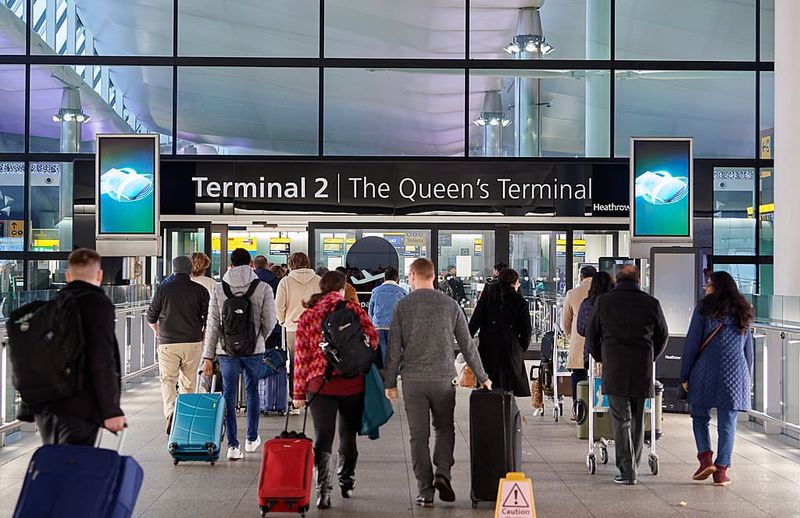
London Heathrow held its position as Europe's busiest airport, welcoming 40 million passengers in the first half of the year, a marginal 0.2% increase. Istanbul Airport followed closely with 39.84 million, up 1.6%. Among the continent's largest hubs, Istanbul Sabiha Gökçen, Barcelona, and Madrid recorded the strongest gains.
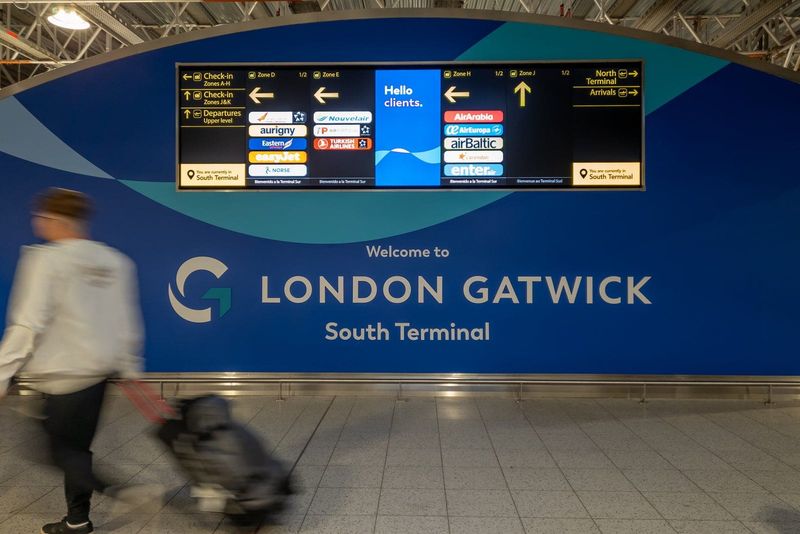
But the biggest hubs as a group grew just 0.8%, the slowest rate of any airport category. London Gatwick fell 5.2%, Munich dropped 4.2%, and Frankfurt slipped 0.8%. Amsterdam Schiphol, Paris Charles de Gaulle, and Rome Fiumicino saw little change.
Smaller airports, those handling fewer than one million passengers a year, grew 8.6%, powered by budget airlines and leisure routes. Yet this category remains the only one still below pre-pandemic passenger levels, a sign that recovery has been uneven and that some markets are still working to regain lost ground.
Bratislava stood out with a 122.7% surge, while Tirana, Tashkent, Malta, Kraków, and Milan Linate all posted double-digit growth. These gains underscore the appeal of secondary cities as travellers seek alternatives to crowded, expensive hubs.
What It Means for the Rest of the Year
The first half of 2026 showed resilience, but also revealed vulnerabilities. Demand for air travel remains strong, particularly among leisure passengers and North Americans visiting Europe. Yet the industry is navigating a narrower margin for error, with fuel costs, border system issues, and geopolitical uncertainty all pulling in different directions.
How the Middle East conflict evolves will likely determine whether growth accelerates or continues to moderate. Airlines have already adjusted capacity, and further cuts could follow if tensions persist. At the same time, pressure is mounting on European authorities to address the border system's shortcomings before the peak summer season ends.
Freight traffic, meanwhile, rose just 0.7% compared with the first half of 2025 but remains 11.2% above pre-pandemic levels, a sign that cargo demand has stabilized at a higher baseline. Aircraft movements increased 1%, though they still trail 2019 volumes, reflecting airlines' focus on larger planes and higher load factors.
For travellers, the message is mixed. Flights are plentiful, especially on popular routes, but expect longer waits at border crossings and less flexibility on less-traveled routes. For the industry, the challenge is to sustain momentum while managing costs and navigating forces largely beyond its control.