A Turbulent Six Months
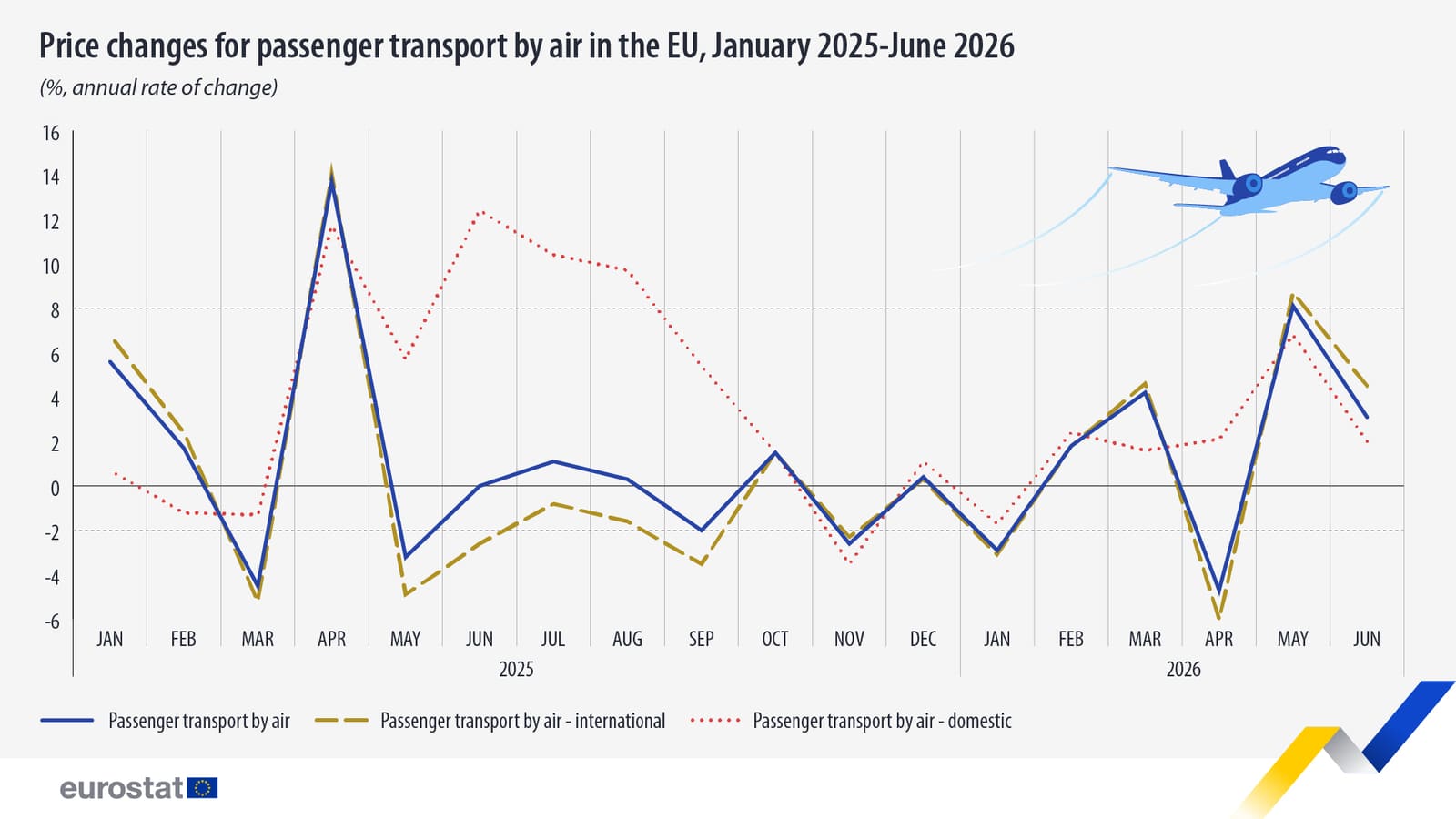
Airline ticket prices in the European Union have been on a rollercoaster since the start of 2026, and June's figures confirm the ride isn't over. Fares rose 3.1% compared with the same month last year, according to Eurostat, following an 8.1% jump in May and a sharp 4.7% fall in April.
The pattern reveals more than seasonal ebb and flow. Between January 2025 and June 2026, the steepest climb came in April 2025, when prices shot up 13.7% year-on-year. Summer months that followed saw smaller increases, then early 2026 brought renewed swings - prices dipped, recovered in February and March, plunged again in April, then rebounded through May and June.
For travelers, the volatility means planning a trip to or within Europe has become something of a moving target. A fare booked in April might look like a bargain compared with May, yet still expensive relative to the previous spring.
Why the Swings?
Several forces are at work. Seasonal demand is the obvious driver - spring break, summer holidays, and business travel cycles all push and pull on capacity. But fuel costs have added another layer of uncertainty this year.
Geopolitical tensions earlier in 2026, including conflict involving Iran, pushed aviation kerosene prices higher. Analysts estimated the fuel spike added roughly twenty-nine euros to short intra-European tickets and eighty-eight euros to long-haul routes. By June, the International Air Transport Association warned carriers faced a potential one-hundred-billion-dollar annual fuel-bill increase.
Yet by July, jet fuel prices had dropped around 40% from their April peak. Ticket prices, however, have not followed the same trajectory downward. The gap between falling fuel costs and sticky fares suggests airlines are holding margins higher, or that other operational expenses - labor, airport fees, fleet financing - are absorbing any savings.
International Routes Drive the Volatility
Domestic flights within EU countries have been relatively stable. In June, domestic fares rose just 2.0% year-on-year. International routes, by contrast, climbed 4.5% in the same month and have shown much sharper swings throughout the period. In April 2025, international ticket prices surged 14.1%; in May 2026, they were up 8.7%.
The divergence makes sense. International flights face more complex pricing dynamics: currency fluctuations, longer routes that burn more fuel, higher airport charges at major hubs, and greater exposure to intercontinental demand shifts. A traveler flying Madrid to Barcelona sees a different market than someone flying Madrid to New York or Athens.
A Patchwork Across Member States
National markets within the EU tell strikingly different stories. Belgium recorded year-on-year increases of 41.5% in April, 33.8% in May, and 28.7% in June. Slovakia moved in the opposite direction, with prices falling 53.0%, 48.2%, and 45.1% over the same three months.
In June alone, Austria saw fares climb 22.3% and Greece 15.1%, while Hungary and Poland both registered declines above 13%. The spread reflects local supply-and-demand imbalances, hub versus point-to-point market structures, and how individual carriers manage capacity and pricing in each country.
For travelers, the takeaway is simple: a Europe-wide average obscures what's happening on the ground. A ticket from Brussels might cost radically more than a comparable journey from Bratislava, even if both airports serve similar city-pair distances.
What It Means for Travelers
The data underscores that air travel pricing in Europe remains unpredictable, shaped by fuel, geopolitics, seasonality, and local market quirks. The modest 3.1% June increase suggests the wildest swings may be moderating, but the spread between countries and route types shows no sign of converging.
Anyone booking flights in the coming months should track prices closely, compare departure points if flexibility exists, and recognize that a fare drop in one market doesn't guarantee relief elsewhere. The fuel-cost decline offers a glimmer of hope for lower prices ahead, but airlines have yet to pass much of that benefit along.