A Building with Performance in Its Past
The Imperial Hotel Kyoto sits inside what was once the Yasaka Kaikan theatre, a 1936 structure where Kyoto's geiko performed for decades. The building stands directly opposite Gion Kōbu Kaburenjō, the district's leading geisha theatre today, and the Gion geisha school. Its location on a cobbled approach near Hanami-koji, a preserved street lined with wooden merchant houses and tea rooms, places guests at the centre of Gion's cultural activity.
The hotel is the only structure in the neighbourhood permitted to exceed the 12-metre height restriction, a concession granted due to its heritage designation. Its seven-story pagoda-inspired facade rises above the surrounding rooflines, offering views that most buildings in the area cannot.
Getting here from Kansai International Airport involves either the JR Haruka limited express to Kyoto Station followed by the Keihan Main Line to Gion-Shijo Station, an airport bus to Kyoto Station's Hachijo exit and then a taxi, or a direct 90-minute taxi ride.
Design That Honours the Original
Japanese architect Tomoyuki Sakakida led the conversion, preserving elements from the theatre era while introducing natural materials throughout the 55-room property. Original window frames, stone pillars, decorative motifs and terracotta tiles remain visible. Cedar wood and marble appear in public spaces and guest rooms, creating continuity between the building's past and present use.
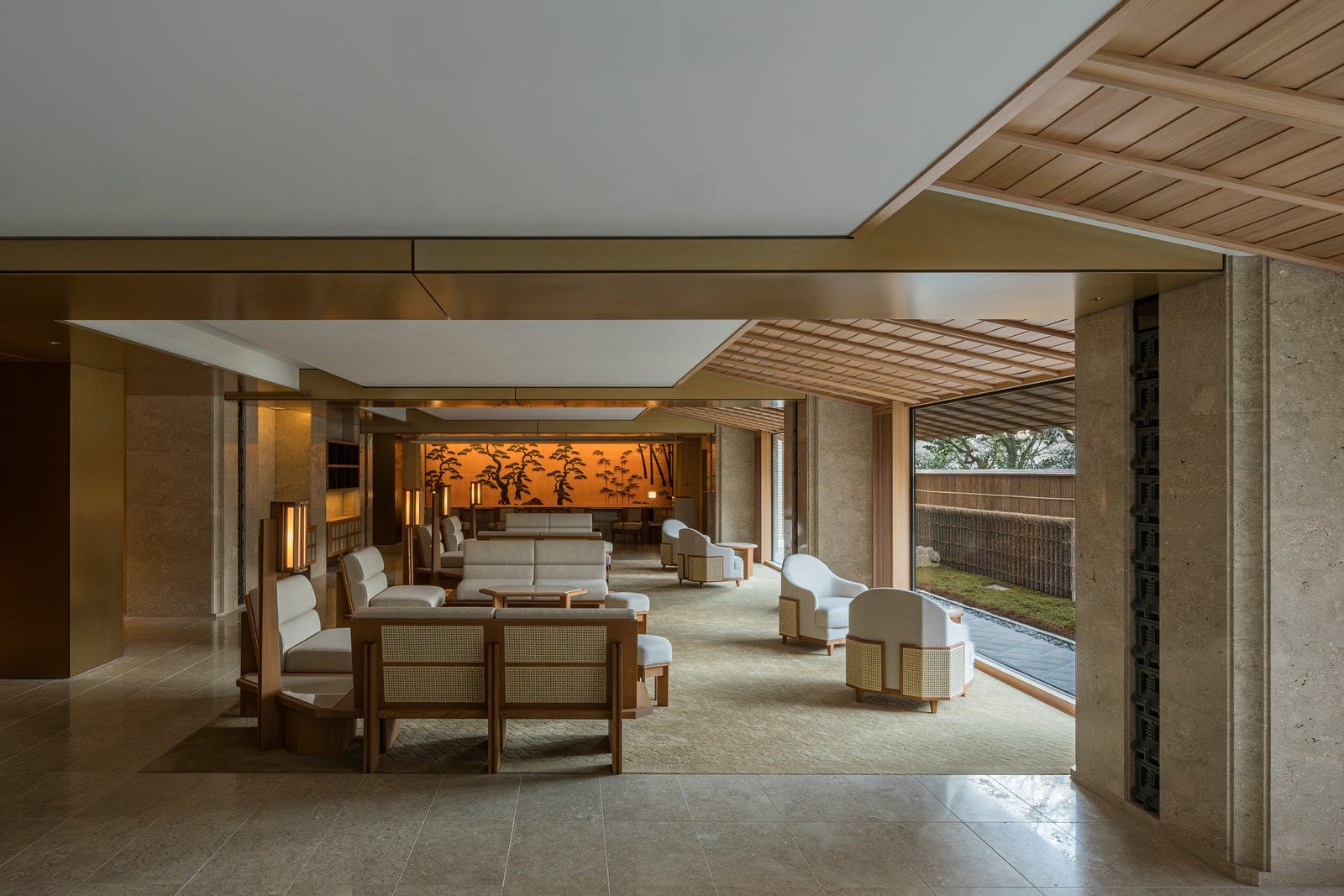
The lobby lounge sets the tone: clusters of cream rattan chairs face floor-to-ceiling windows that frame an interior garden. The space feels residential rather than commercial, a quality that carries through the rest of the property. Most rooms occupy the historic Main Building and follow a modern Japanese aesthetic. A smaller number in the newly built North Wing are traditional tatami mat rooms where shoes come off at the threshold.
Rooms Built Around Local Craft
Guest rooms feature cedar headboards, silk wallpaper and bedside lamps designed to resemble Japanese lanterns. Dual-aspect suites overlook Hanami-koji and include framed relics from the Yasaka Kaikan theatre. Refreshment stations come stocked with Nespresso machines, teapots, fine china and daily-replenished minibars that include champagne and Japanese whiskey at no extra charge.
Bathrooms are finished in marble and equipped with deep soaking tubs, rain showers and an unusual variety of towel sizes, all notably thick. Amenities are plentiful, and the attention to textile quality is immediately apparent.
Dining from French Tasting Menus to All-Day Japanese
Two restaurants and two bars serve the property. Yasaka, the all-day dining venue, offers multi-course Japanese and American breakfasts prepared in a small open kitchen. The presentation is precise, and plant-based options are available upon request.
Ren, a second-floor French restaurant, seats ten at a counter and serves tasting menus at dinner. The kitchen accommodates dietary preferences with advance notice.
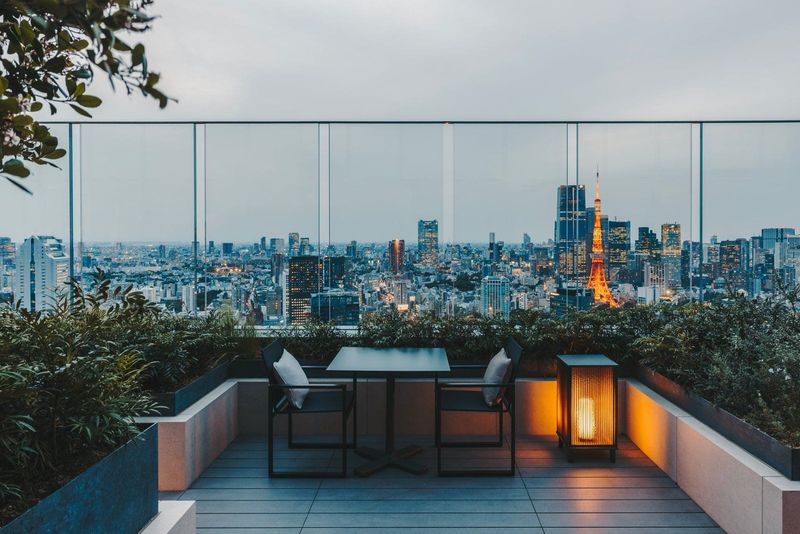
The Old Imperial Bar occupies the top floor and specializes in refined cocktails, including the Mount Hiei, a matcha-infused signature drink named after the nearby landmark. The Rooftop, a guest-only outdoor space on the same level, opens during warmer months and provides expansive views over the Kyoto skyline.
An in-house bakery behind the reception desk produces complimentary snacks throughout the day. Florentines and mini madeleines appear in a small guest-only refreshment area off the lobby, accompanied by tea, coffee and soft drinks. At 5pm, the selection expands to include champagne and sake.
A Basement Pool Surrounded by Island Stone
The wellness facilities occupy the basement level. A 24-hour gym with high-tech equipment sits adjacent to a 17.5-metre swimming pool kept at a warm temperature year-round. The pool is surrounded by large rocks sourced from Shikoku Island, south of Honshu. Dark walls and low lighting give the space an enclosed, almost cave-like atmosphere.
Separate male and female spa areas include hot soaking tubs, saunas, steam rooms, showers, lockers and changing facilities. Robes, towels and beauty products are provided. Guests who arrive without workout clothes, swimsuits or hats can borrow them from the hotel.
Service That Anticipates Without Hovering
White-gloved bellboys meet arriving guests at the entrance and escort them past reception into the lounge, where check-in takes place over green tea, hot towels and locally made sweets. The concierge team handles restaurant reservations, often securing tables at short notice, and offers neighbourhood guidance without pushing a scripted itinerary.
The level of attention is consistent but never intrusive. Staff remember preferences and adjust service accordingly, a balance that defines the Imperial Hotel brand across its properties.
Practical Considerations
Check-in begins at 2pm, check-out at noon. One accessible room features lowered handles, an adjustable bed and bathroom rails. All floors are reachable via spacious lifts with lower-level buttons, and wheelchair-accessible bathrooms are available on the restaurant level.
Four rooms can interconnect, accommodating families who need extra beds or cots for an additional fee. The property does not accept pets.
Rooms vary in size and outlook, with some facing the interior garden and others overlooking Hanami-koji or the broader city. The choice between the historic Main Building and the newer North Wing comes down to preference for modern Japanese design versus traditional tatami mat rooms.
Who It Suits
The Imperial Hotel Kyoto works best for travellers who value craftsmanship, quieter luxury and proximity to Gion's cultural landmarks. Couples marking an occasion, solo travellers seeking a comfortable base for exploring Kyoto, and business guests who appreciate attentive service without formality will find it well-suited to their needs.
It is less appropriate for large groups, young travellers focused on nightlife, or anyone looking for a sprawling resort-style property. The 55 rooms keep the atmosphere intimate, and the location in Gion means stepping into a neighbourhood that is dense with history but also crowded with tourists during peak seasons.
The building's height advantage delivers views that few hotels in the area can offer, and the preserved theatre elements provide a tangible connection to Kyoto's performing arts heritage. Whether that history enhances the experience or simply serves as backdrop depends on how much context a guest brings to the stay.