A Guide in Exile
Fatima Haidari spent years showing visitors the landscapes and heritage sites of Afghanistan. When the Taliban returned to power in 2021, she left the country. The work she had built disappeared almost overnight.
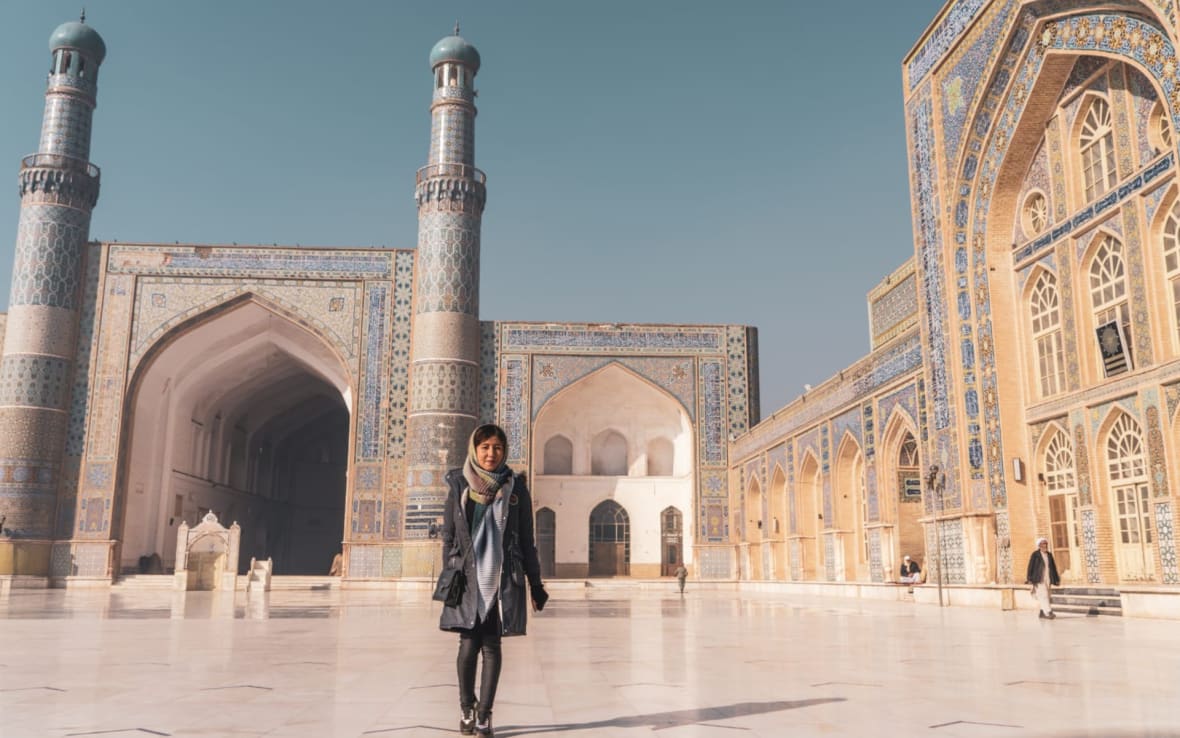
Now based outside Afghanistan, Haidari has started leading virtual tours through Untamed Borders, a company that organises trips to difficult-to-reach destinations. The format lets her continue sharing places she knows intimately whilst living abroad. Herat, the city where she has led several digital tours, sits in western Afghanistan near the border with Iran. It has been known for centuries for its poets, scholars, and blue-tiled mosques.
How the Tours Work
The virtual sessions run live, not pre-recorded. Haidari appears on screen and walks participants through streets, historical sites, and neighbourhoods using a combination of video footage, photographs, and commentary. She explains the architecture, the daily rhythms of the city, and the cultural layers that most visitors would miss.
Each tour lasts around 90 minutes. Participants can ask questions in real time. The format is closer to a guided walk than a documentary. It does not replace being there, but it offers context that even some in-person visits lack.
Why Virtual Access Matters
Afghanistan has been effectively closed to most travellers since 2021. Security concerns, visa restrictions, and the collapse of commercial tourism infrastructure have made independent travel nearly impossible. For many, these virtual sessions are the only way to see the country in any detail.
The tours also provide work for guides who can no longer operate inside Afghanistan. Haidari is among a small number of Afghan women who worked in tourism before 2021. Under current restrictions, women face severe limits on employment, education, and movement. Virtual guiding offers a rare avenue to continue professional work from outside the country.
What Herat Offers
Herat has long been a cultural centre. The city's Friday Mosque, with its intricate tilework, dates back to the 12th century. The citadel, perched above the old town, has stood for more than 2,000 years. Nearby, the minarets of the Musalla Complex are remnants of a once-vast religious and educational site.
The city also has a thriving tradition of calligraphy, miniature painting, and poetry. Haidari's tours touch on these traditions, offering insight into how they have survived decades of conflict and political change.
The Broader Shift
Haidari's work is part of a wider experiment in remote travel. Other companies and guides have launched virtual tours of regions affected by war, climate disaster, or pandemic-related closures. The model is not new, but it has gained traction as a way to maintain connections to places that have become unreachable.
For Afghanistan, the stakes are higher. The country has largely vanished from international view. Tourism, which was never large-scale, has ceased almost entirely. Virtual tours do not generate the economic impact of physical visits, but they keep the cultural narrative alive.
Challenges and Limits
The format has obvious constraints. Participants cannot touch the tilework, smell the spices in the bazaar, or feel the weight of the air at altitude. The experience is mediated by a screen. It also depends on stable internet access, which can be inconsistent in parts of Afghanistan.
There is also the question of representation. Virtual tours are shaped by the guide's perspective and the footage available. They cannot capture the full complexity of a place, especially one as politically and socially fraught as Afghanistan. Still, they offer more nuance than most news coverage.
A Way Forward
For Haidari, the tours are both professional and personal. They allow her to stay connected to a place she cannot return to safely. They also give her a platform to present Afghanistan beyond the narrow frame of conflict and crisis.
The model is unlikely to replace traditional tourism, but it fills a gap. It reaches people who might never have considered visiting Afghanistan, and it provides income and purpose for guides in exile. As long as the country remains closed to most travellers, virtual access may be the closest many will get.