Revenue Outpaces Arrivals
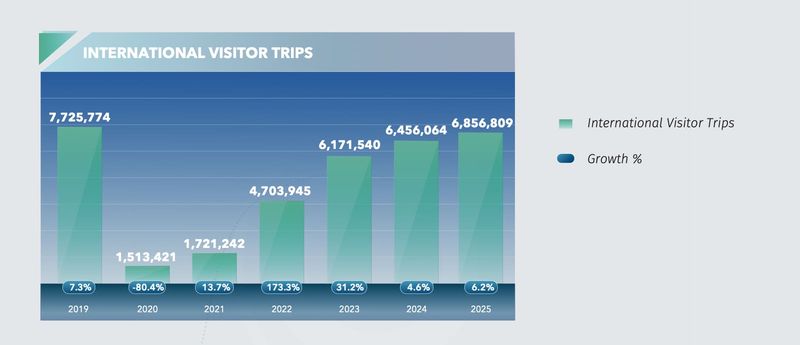
Greece brought in 20.43 million international visitors between January and July 2026, an 8.6 per cent increase over the same stretch last year, according to provisional data from the Bank of Greece. But the bigger story sits in the revenue column. Travel receipts reached €13.5 billion over those seven months, climbing 12 per cent year-on-year and marking a new record for the period.
That gap between arrivals and revenue growth points to higher spending per traveller. The pattern became especially clear in July, when inbound flows actually dropped 3.1 per cent to 6.55 million yet receipts still rose 7.2 per cent to €4.72 billion. The Bank of Greece attributed the July revenue gain to a 10 per cent jump in average expenditure per trip.
Where the Money Came From
The revenue picture varied sharply by market. Receipts from visitors based in the EU-27 rose 6.9 per cent to €7.09 billion, while spending by travellers from outside the bloc climbed 18.3 per cent to €5.78 billion. Within the eurozone, receipts increased 11.3 per cent to €5.88 billion.
Italy delivered the steepest gain among major source markets, with receipts surging 31.6 per cent to €828.1 million. Revenue from the United Kingdom rose 23.3 per cent to €2.09 billion, and receipts from the United States increased 7.9 per cent to €1.06 billion.
Two large markets moved in the opposite direction. Revenue from Germany, Greece's top source by volume, edged down 0.7 per cent to €1.98 billion. Receipts from France fell 16.8 per cent to €623.7 million. The German figure is particularly notable given that arrivals from Germany actually grew 7.7 per cent to 3.03 million over the seven months, suggesting a drop in per-visitor spending rather than a drop in interest.
Visitor Flows by Market
Arrivals from several key markets continued to grow. Beyond Germany's 7.7 per cent increase, Italy sent 17.2 per cent more visitors, reaching 1.20 million. UK arrivals climbed 10.5 per cent to 2.27 million, and US arrivals rose 6.1 per cent to 910,500.
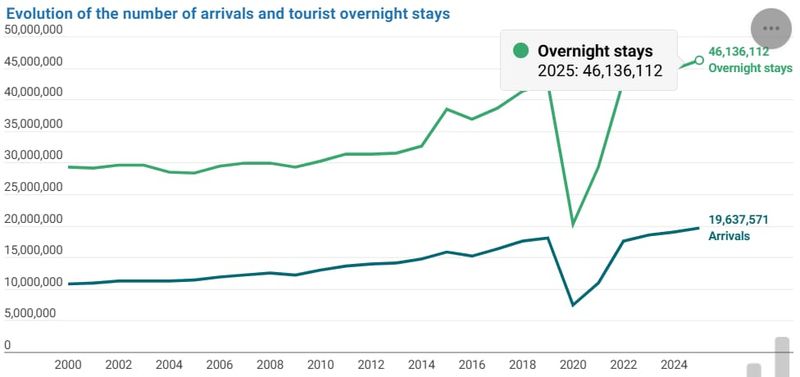
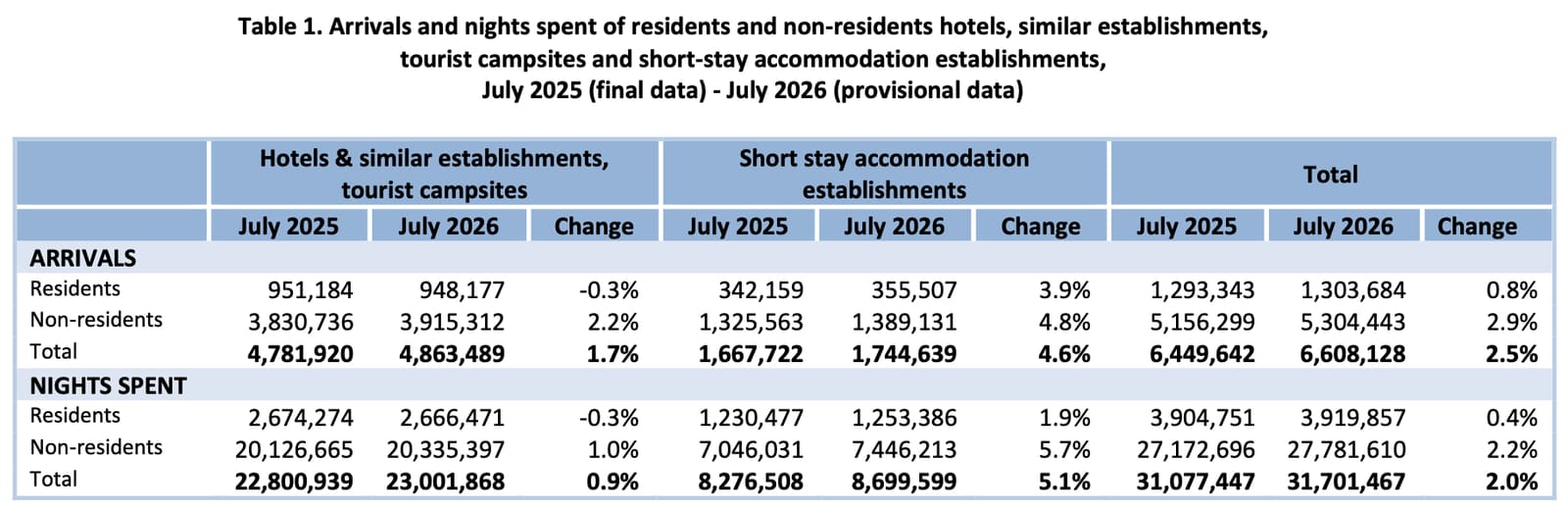
The Hellenic Statistical Authority reported that Greece's hotels, campsites and short-stay accommodation logged 6.61 million arrivals and 31.70 million overnight stays in July alone. Foreign visitors accounted for 80.3 per cent of arrivals and 87.6 per cent of overnight stays, underscoring how heavily the sector leans on international demand.
Earlier Momentum and Forward Bookings
The seven-month figures build on strong first-half performance. Between January and June, Greece recorded 13.49 million inbound travellers and €8.80 billion in travel receipts, increases of 15.4 per cent and 14.8 per cent respectively.
Looking ahead, a Greek National Tourism Organisation survey found that 29 per cent of European travellers intend to visit Greece by May 2027. Around 35 per cent of respondents planning a Greek trip were eyeing the September-to-November window of 2026, suggesting demand may hold beyond the traditional summer peak.
What Higher Spending Means
The divergence between arrival growth and revenue growth raises questions about what's driving the higher per-trip spending. Possibilities include longer stays, more spending on accommodation and dining, or a shift in visitor mix towards higher-budget travellers. The data doesn't break down spending by category, so the mechanism remains unclear.
What is clear is that Greece's tourism sector is extracting more revenue from each visitor. Whether that reflects genuine added value, price increases that visitors are willing to absorb, or a narrowing of the visitor base towards wealthier travellers will shape how sustainable this growth proves over time. For now, the country is managing to grow both volume and yield, a combination most destinations struggle to achieve.