A Recovery That Kept Accelerating
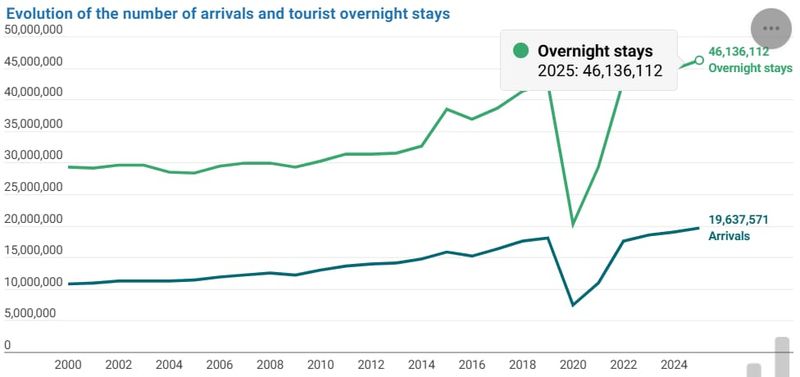
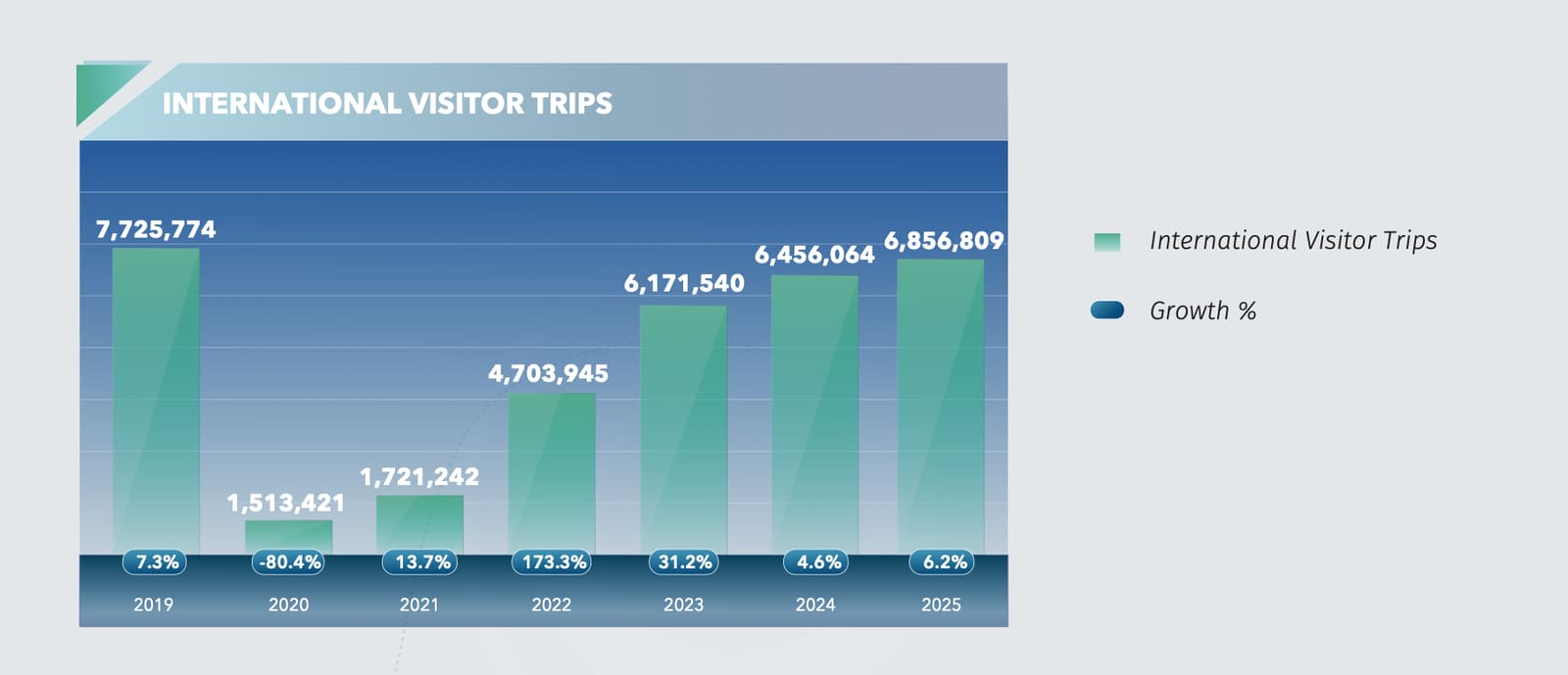
Georgia welcomed 5.5 million international visitors in 2025, more than triple the 1.6 million who arrived in 2021. Revenue from tourism climbed to $4.7 billion, according to the National Statistics Office of Georgia. The country not only regained pre-pandemic levels in 2024 but kept pushing higher through 2025, making it one of the fastest-expanding tourism markets in the broader European neighbourhood.
What stands out is not just the pace of growth but its timing. Domestic protests, friction with the European Union, and stalled progress on European integration have marked recent years, yet arrivals kept rising. The paradox reveals something important about Georgia's visitor base: it draws from multiple directions at once. Russia, Türkiye, Israel, Gulf states, China, and India contribute to a diversified mix that has so far cushioned the sector against political shocks.
Infrastructure Ambitions at Scale
The government's plans reflect an appetite for transformation. A proposed international airport at Vaziani, near Tbilisi, would carry a capacity of around 19 million passengers a year, according to the Georgian National Tourism Administration. If realised, the project would fundamentally alter the country's ability to absorb long-haul traffic. Existing airports are also being expanded, and private capital is flowing into hotels and regional connectivity projects.
Infrastructure alone, though, does not guarantee competitiveness. Georgia's current model leans heavily on volume and price-sensitive markets from neighbouring regions. Wine tourism, gastronomy, mountain resorts, wellness, and cultural heritage offer pathways to higher spending per visitor, but these require investment in product development and marketing, not just runways and roads.
The Question Shifts From How Many to How Much
The real strategic question facing Georgia is not how many tourists it can attract, but how much economic value each one generates. A tourism economy built on sheer numbers is vulnerable to shifts in regional demand and currency fluctuations. One that emphasises spending per visitor, diversified experiences, and year-round appeal is more resilient.
Looking towards 2035, two scenarios emerge. A moderate path, with steady investment and continued market diversification, could bring arrivals to around eight million and revenue to approximately $8 billion. A more ambitious trajectory, supported by stronger connectivity, higher-value products, and improved investor confidence, might push arrivals towards ten million and revenue close to $10 billion. These are scenario estimates, not official forecasts, and their realisation depends on factors that remain uncertain.
The Environmental and Political Balancing Act
Georgia's mountains, coastline, and protected areas are central to its appeal, but rapid expansion brings pressure. Destination management, environmental safeguards, and community participation are not just ethical considerations; they are competitive ones. Visitors seeking authenticity and natural beauty will not return if those assets are degraded.
Political stability also matters, even if visitor numbers have so far defied political turbulence. Long-term investment requires regulatory predictability, reliable air links, and confidence in the operating environment. Georgia has shown it can attract tourists during uncertain times. Whether it can sustain the conditions that attract patient capital is a different question.
What Durability Requires
The past five years have demonstrated that Georgia has the natural assets, entrepreneurial energy, and international appeal to compete beyond its immediate region. The next decade will test whether the country can convert momentum into a tourism sector that is less dependent on any single source market, more resilient to geopolitical disruption, and capable of generating greater value for its people.
Building larger airports and accommodating more visitors will expand the industry. Strengthening institutions, protecting natural resources, and creating a predictable investment climate will determine whether that expansion lasts. Georgia has proved tourism can grow through political uncertainty. The harder question is whether it can build a tourism economy that thrives because of the foundations it lays, not in spite of the challenges it faces.