The Purchase Agreement
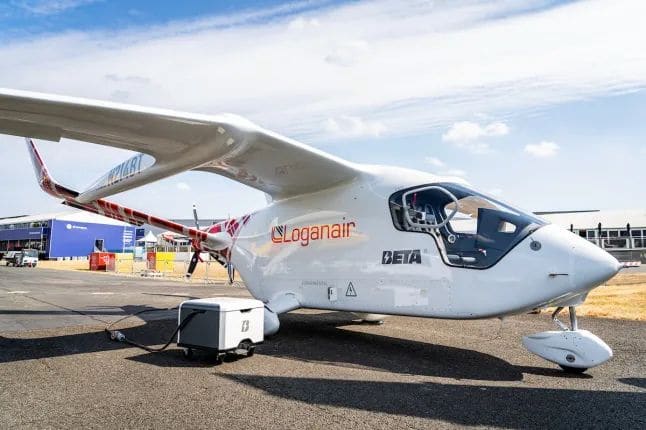
Loganair has signed a contract to purchase five BETA Technologies ALIA CX300 all-electric aircraft, with an option for five additional planes. The deal, announced at the Farnborough Airshow on July 20, follows successful demonstration flights conducted in March across several Scottish mail routes, according to BETA Technologies.
The UK's largest regional airline tested the aircraft on routes between Glasgow and Dundee, as well as flights over Aberdeen, Inverness, Orkney, and Wick. Those trials convinced Loganair that the electric planes could handle the operational demands of its network.
Most of Loganair's flights cover approximately 160 kilometers, well within the CX300's 622-kilometer range, according to the carrier. That buffer matters for an airline serving remote Scottish communities where weather diversions are common and backup options limited.
Economics of Electric Flight
The timing reflects broader cost pressures facing regional carriers. Aircraft fuel prices have climbed sharply this year amid ongoing tensions in the Middle East, making the economics of electric propulsion more compelling.
Loganair chief executive Luke Farajallah said the all-electric operation could reduce operating costs by up to 80 percent compared to conventional turboprop aircraft. That figure accounts for fuel savings, lower maintenance requirements, and reduced engine complexity.
The CX300 requires 20 to 40 minutes to recharge between flights, a turnaround time Farajallah described as compatible with maintaining reliable regional connectivity. For comparison, traditional aircraft turnarounds at regional airports typically take 30 to 45 minutes when factoring in refueling, passenger boarding, and baggage handling.
The aircraft can use existing runways without infrastructure modifications, removing a significant barrier to adoption. Regional airports will need to install charging equipment, but the electrical load is manageable for facilities already connected to the grid.
The Technology Race
The CX300 competes directly with the Cessna Caravan and similar turboprop aircraft that dominate short-haul regional service. While BETA Technologies advertises 5.77 cubic meters of interior space, slightly less than the Cessna's cargo capacity, the operating cost advantage is substantial.
Electric aircraft propulsion is no longer experimental. The Pipistrel Velis Electro became the first fully certified production electric plane in 2020. Since then, manufacturers have accelerated development timelines.
Eviation Aircraft is seeking additional funding for its Alice commuter plane, while Sweden's Heart Aerospace is developing the hybrid-electric ES-30. Each design targets the same market segment: routes under 500 kilometers where battery weight penalties are manageable and recharging infrastructure can be concentrated at a limited number of airports.
Kyle Clark, founder and chief executive of BETA Technologies, said the company had flown more than a thousand nautical miles across Loganair's network during the March trials, testing the aircraft on actual routes and in real Scottish weather conditions.
What It Means for Regional Aviation
Electric aircraft present a practical solution for operators focused on short commuter and freight routes, particularly in markets where fuel costs represent a disproportionate share of operating expenses. The technology offers two distinct advantages: eliminating direct carbon emissions from flight operations and dramatically lowering per-flight costs.
For passengers on Scotland's inter-island and mainland routes, the shift to electric propulsion should be largely transparent. The CX300 is quieter than turboprop aircraft, a benefit for communities near regional airports, but flight times and service frequency are expected to remain unchanged.
The bigger question is scalability. Battery technology limits electric aircraft to regional routes for the foreseeable future. Long-haul flight requires energy density that current batteries cannot provide, meaning electric propulsion will remain confined to the short-haul market where it can deliver immediate economic and environmental returns.
Loganair's commitment represents a vote of confidence in the technology's readiness for commercial service. Whether other European regional carriers follow will depend on the operational results Loganair reports over the next several years and the pace at which charging infrastructure expands across the continent's regional airport network.