A Different Kind of Budget Stay
Finding decent accommodation in central London for less than £100 has always been a gamble. The options typically range from hostel dorms with questionable maintenance to basement rooms in neighborhoods far from the action. But a new generation of pod hotels is changing that equation, bringing Japanese-style capsule design to some of the city's most expensive districts.
Otherwander, which opened recently on Dean Street in Soho, charges £65 per night for a capsule bed. That price point puts it squarely in budget territory, but the experience feels worlds apart from the usual trade-offs that come with cheap London lodging.
The concept borrows from Japanese pod hotels that emerged in the 1970s as practical accommodation for workers. Strip away the unused amenities of a traditional hotel room, the thinking goes, and you can offer travelers exactly what they need: a clean bed, climate control, and a good night's sleep, all in a fraction of the space.
What You Actually Get
Each capsule at Otherwander measures two meters long by 90 centimeters wide. The space is tight, but thoughtfully designed. Inside, guests find a digital control panel for adjusting lighting and temperature, charging sockets, a small mirror, a luggage rack, and a clothes hanger. The air system pulls fresh air from outside rather than recirculating it, a detail that makes a noticeable difference in how the space feels.
The tiny doors that line each corridor open into what the hotel calls "nests." Once inside with the door closed, the capsule becomes a private, warmly lit pod. It's not a space for spreading out or spending hours awake, but as a place to sleep, it works surprisingly well.
Bathrooms are shared and located on each floor, equipped with rain showers, shampoo, and body wash. Guests receive fresh towels at check-in. The communal areas downstairs offer Wi-Fi, seating, and workspace for those who need it before or after their stay.
Who's Staying There
Six weeks after opening, Otherwander is drawing a mix of guests. According to Fredrik Korallus, the hotel's CEO, the clientele includes business travelers, backpackers, city visitors, and weekly commuters who work in London a few days each week. Some book same-day; others return regularly.
That range reflects a broader shift in how people think about accommodation. Not everyone needs a desk, a bathtub, or a wardrobe for a one-night stay. Many travelers, especially younger ones, prioritize location and price over square footage. Staying in Soho for £65 opens up possibilities that would otherwise require either a much higher budget or a long commute from cheaper neighborhoods.
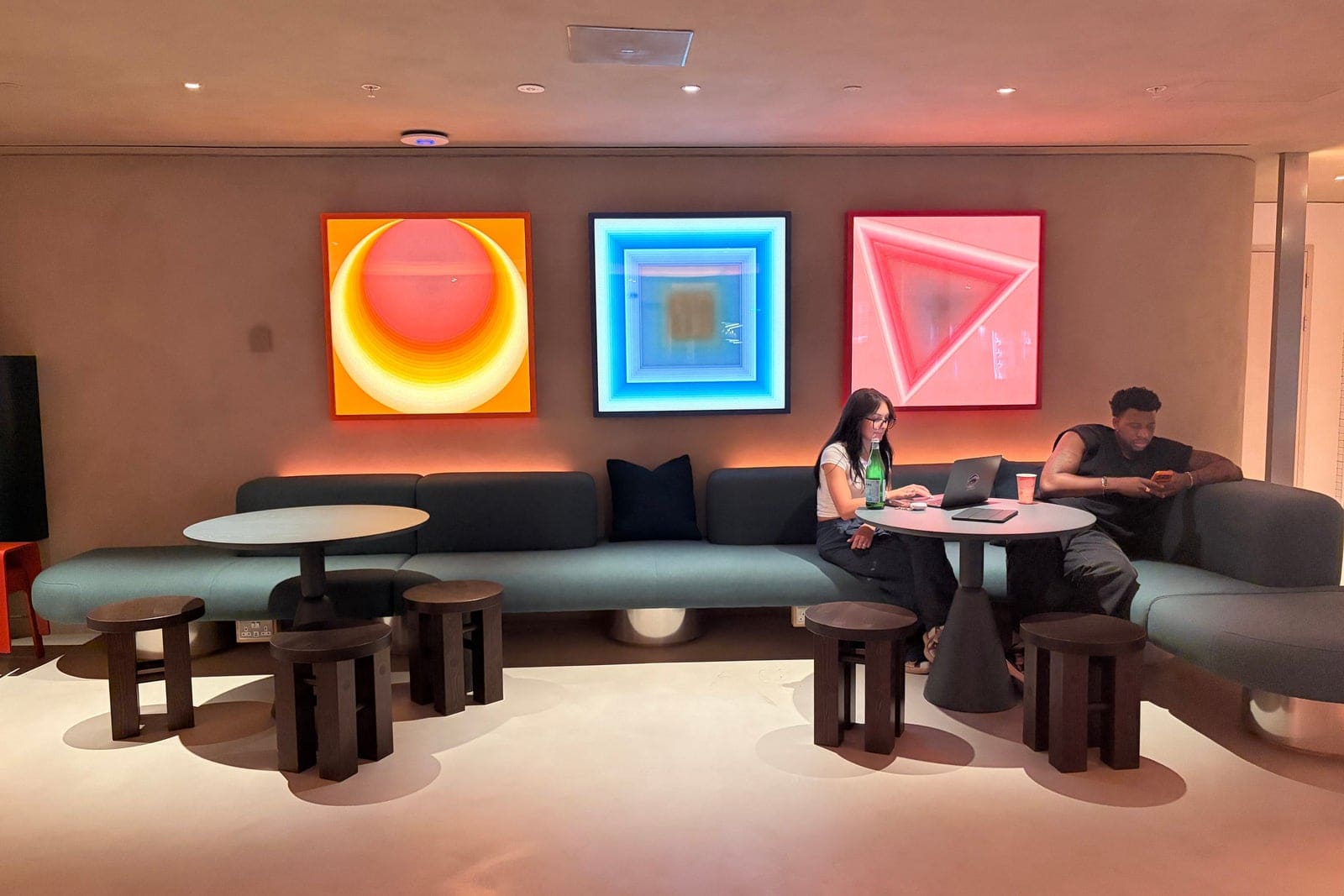
The hotel converted from what was previously one of London's highest-rated hostels. The bones of the building remain, but the interior has been completely reimagined with neon-lit screens, airport-style barriers, and a modern aesthetic that feels more like a tech startup than traditional hospitality.
The Economics of Small Spaces
Pod hotels make financial sense in expensive cities because they maximize the number of guests per square meter. By eliminating underused space and shared amenities like minibars, desks, and closets, operators can charge less while still turning a profit. Guests, in turn, get access to neighborhoods that would otherwise be out of reach.
London's accommodation crisis has made this model increasingly appealing. With average hotel rates in central districts often exceeding £150 per night, budget-conscious travelers face limited options. Hostels offer cheaper beds but often lack privacy and cleanliness. Airbnb prices have climbed, and quality varies wildly. Pod hotels occupy a middle ground: private sleeping space at hostel-adjacent prices.
Korallus has plans to expand the concept, with another London location in development and teams exploring sites in New York, Edinburgh, and Amsterdam. The model seems to travel well to any city where accommodation costs are high and space is at a premium.
The Trade-Offs
Capsule hotels aren't for everyone. The narrow dimensions mean getting dressed requires some flexibility. Shared bathrooms mean encountering other guests, sometimes in various states of undress. There's no room service, no lobby bar, no concierge desk. Check-in and check-out are entirely self-service, handled through QR codes on a smartphone.
For travelers who value space, traditional hotel amenities, or privacy beyond a lockable door, a capsule will feel claustrophobic. But for those whose priority is a clean, safe place to sleep in a good location, the format delivers.
The rise of pod hotels also raises questions about how we define acceptable accommodation. Critics argue that shrinking living spaces normalize cramped conditions and reflect a broader housing affordability crisis. Proponents counter that offering more options at different price points expands access rather than restricting it.
A Shift in Expectations
What's notable about Otherwander isn't just the price or the design. It's the realization that budget accommodation doesn't have to feel like a compromise. The hotel is clean, quiet, and functional. The location is prime. The experience, while minimal, is thoughtfully executed.
For weekly commuters and frequent travelers, that combination matters. Spending three nights a week in a basement room in Finsbury Park adds up, both in cost and in wear. A well-designed capsule in Soho, by contrast, turns the commute into something more manageable.
As more cities grapple with housing and tourism pressures, expect to see more experiments like this. The challenge will be maintaining quality as the model scales. The appeal of Otherwander lies not just in its low price, but in the care taken with details: the fresh air system, the lighting controls, the cleanliness. If future pod hotels cut corners to push prices even lower, the format risks sliding back into the category of "cheap but uncomfortable."
For now, though, London has at least one capsule hotel that proves the concept can work. Whether that's enough to shift the broader market remains to be seen.