A Portfolio Approach to Tourism
For years, the pecking order felt fixed. Thailand commanded beach holidays, Singapore held the premium segment, Bali owned the lifestyle brand. Malaysia, meanwhile, operated in the background, a dependable option but rarely the first choice.
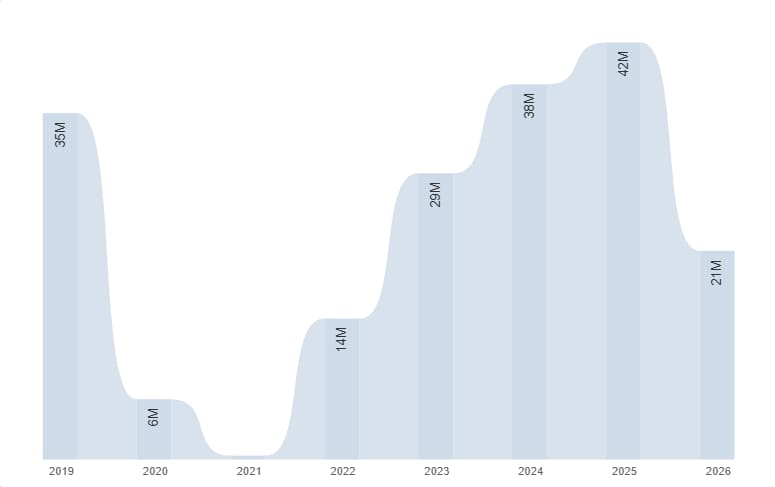
That's changing. The country logged more than 42 million visitors in 2025, an increase of over 11 percent from the previous year. In the first five months of 2026 alone, 17.5 million people arrived. The government's Visit Malaysia 2026 campaign is aiming for 47 million by year-end, and the momentum suggests it's within reach.
But raw numbers only tell part of the story. What's more interesting is how Malaysia is structuring its appeal: not around a single star destination, but across a diversified set of assets. Kuala Lumpur handles business travel and retail. Langkawi covers resorts. Penang brings heritage and food. Sabah and Sarawak pull in divers and nature tourists. Medical tourism, weddings, golf, and Muslim-friendly infrastructure fill out the rest.
It's a hedge, not a hero product. And in a region where over-reliance on one market or traveller type can backfire quickly, that spread starts to look like an advantage.
China's Return Fuels the First Wave
Chinese visitors are driving much of the recent surge. Around 4.7 million arrived in 2025, up roughly 25 percent. The first quarter of 2026 saw close to 1.4 million more.
The government has moved deliberately to capture that demand. Visa rules have been relaxed. Air capacity has expanded in parallel. As of May 2026, Malaysia and China were connected by about 744 weekly flights, carrying nearly 149,000 seats.
The formula is straightforward: ease the paperwork, add the planes, and let the volume follow. Malaysia is executing on all three fronts at once, and the results are showing up in arrival data.
India's Middle Class Comes Into View
If China defined outbound travel over the past decade, India may shape the next one. Malaysia welcomed roughly 1.5 million Indian visitors in 2025, a rise of 14.6 percent. More than 600,000 arrived in the first five months of 2026.
Competition for this segment is fierce. Dubai, Thailand, Singapore, Saudi Arabia, and parts of Europe are all making their pitch. Malaysia's answer: proximity, affordability, widespread English, familiar food options, and infrastructure built for families.
It's a practical value proposition aimed at a traveller who wants ease, not exclusivity. And for now, it seems to be working.
Geography as Strategy
Malaysia shares a border with Singapore, and that proximity shows up in the numbers. About 21.1 million Singaporean visitors arrived in 2025, an increase of nearly 12 percent. Many of those are same-day excursionists rather than overnight guests, a distinction Malaysia's own methodology accounts for.
Short-stay traffic still generates spending on meals, shopping, and transport. More broadly, ASEAN markets accounted for almost 72 percent of Malaysia's inbound arrivals in the first five months of 2026. The country is cultivating a regional base that functions much like Europe's intra-continental travel flows: frequent, predictable, and resilient.
Tourism as Economic Infrastructure
International visitor spending reached approximately RM106.8 billion (around USD 23.7 billion) in 2024, according to data from Malaysia's tourism authorities. The sector's total contribution to GDP hit RM291.9 billion, about 15.1 percent of the economy. Domestic tourism added another RM121.3 billion in 2025.
That creates a three-layer structure: long-haul international, regional ASEAN, and domestic demand. If one segment weakens, the others can absorb some of the shock.
Medical tourism offers a case study in how Malaysia is moving beyond volume. Roughly 1.85 million health-related visitors in 2025 generated about RM3.35 billion in revenue. Hospitals have become export industries, offering procedures at a fraction of Western prices while maintaining international accreditation.
The same logic applies to conferences, luxury travel, weddings, and golf. The challenge now is raising average spending per visitor, not just adding more arrivals.
Kuala Lumpur's Identity Problem
The capital has the infrastructure: a major international airport, high-end hotels, strong dining and retail, and connections spanning Asia and the Middle East. What it lacks is a clear identity.
Bangkok became synonymous with urban energy and nightlife. Singapore positioned itself as a polished, premium gateway. Dubai turned stopovers into an economic model. Kuala Lumpur remains harder to pin down.
That ambiguity is both a gap and an opportunity. If the city can convert transit passengers into multi-day stopover tourists, win more regional conferences, and attract premium hospitality investment, it could carve out a distinct role. But the window won't stay open indefinitely. Other cities are moving fast.
The Gulf Connection
Malaysia is one of the easiest large destinations in Asia for Muslim travellers. Halal food is standard, prayer facilities are widely available, hotels understand the market, and English is common.
But the bigger opportunity may lie in investment, not just visitors. As Gulf capital flows into global hospitality and destination development, Malaysia is positioning itself as a target. The country offers political stability, a developed economy, and a Muslim-majority population that aligns culturally with Gulf investors.
If that investment materializes at scale, it could reshape Malaysia's tourism infrastructure for the next decade.
What Comes After the Campaign
The Visit Malaysia 2026 campaign will end, and then the harder questions begin. Did visitors stay longer? Did spending per capita rise? Did foreign investment follow? Did destinations outside Kuala Lumpur benefit, or did the gains concentrate in a few urban centers?
And most importantly: Did Malaysia shift from competing on price to competing on value?
Thailand isn't losing its hold on beach tourism. Singapore will continue pulling high-spending business travellers. Bali's brand remains strong. Vietnam is growing quickly. But Malaysia has assembled a credible set of assets: infrastructure, geography, strong access to China and India, a large ASEAN catchment, cultural alignment with the Muslim world, and a sizable domestic market.
The country's old slogan, "Malaysia Truly Asia," was one of the region's most recognizable for years. The next test is harder: turning scale into spending, visitors into investment, and growth into lasting economic leverage. If Malaysia pulls that off, its rise will look less like a post-pandemic bounce and more like a permanent shift in Southeast Asia's tourism hierarchy.