A Regional Property Doubles Down
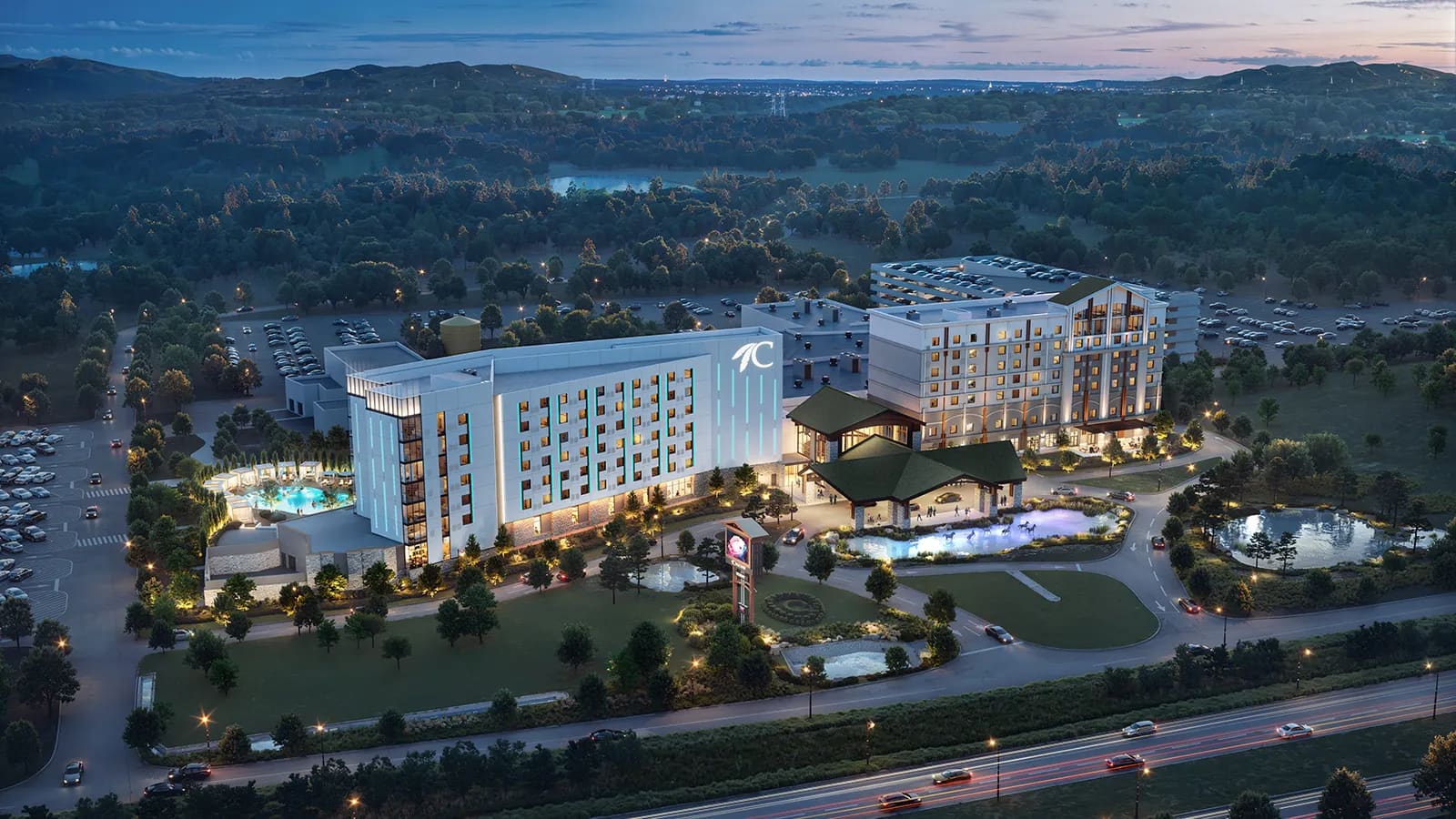
The Choctaw Casino & Resort in Pocola, a town of fewer than 5,000 residents along Oklahoma's eastern border, is midway through a transformation that will nearly double its hotel inventory. The Choctaw Nation of Oklahoma has awarded Tutor Perini Building Corp. a contract worth $140 million to build a seven-story, 130-room tower and refresh the existing property inside and out, according to the contractor's parent company.
Preconstruction work began in 2025. Crews are expected to break ground on the main build this autumn, with the project encompassing not only the new tower but also renovations to all current hotel rooms, the gaming floor, and every restaurant and bar on site. The tower will house a spa, a fitness center, and a pool complex, amenities that position the property to compete beyond the slots-and-table crowd.
Pocola sits just across the Arkansas state line, a geography that has long made it a magnet for visitors from Fort Smith and the broader River Valley region. For tribal gaming operators, location often matters more than scale, and this project suggests the Choctaw Nation sees room to grow its share of a market that straddles two states.
Why Tribal Operators Keep Building
Tribal gaming revenue in Oklahoma reached $5.4 billion in fiscal 2023, data from the Oklahoma Indian Gaming Association show, and the state now hosts more than 140 tribal casinos. The Choctaw Nation operates more than a dozen gaming properties across southeastern Oklahoma, with the Durant flagship anchoring the portfolio. Pocola, by comparison, is a quieter asset, but its proximity to Arkansas and its position along Interstate 540 give it steady traffic.
The decision to invest heavily in rooms rather than only gaming space reflects a broader shift in how regional casinos think about revenue mix. Gaming revenue remains the core, but lodging, food, and entertainment now account for a growing share of total spend. A property that can keep guests overnight, offer a full breakfast, and host a wedding or corporate retreat generates more per visitor than one that serves only as a day-trip destination.
Oklahoma's regulatory environment has also matured. The state renewed its gaming compact with tribes in 2020, locking in revenue-sharing terms and clearing the way for long-term capital planning. That stability makes it easier for operators to commit to projects that take years to complete and decades to pay off.
The Contractor's Track Record in Gaming
Tutor Perini Building Corp., the arm of the Los Angeles-based construction giant that handles commercial and hospitality work, has built a niche in casino projects. Last summer the firm secured a $220 million contract for the second phase of the Eagle Mountain Casino expansion near Modesto, California. The company's experience with tribal clients and complex phasing, where properties must remain operational during construction, gives it an edge in this segment.
Not every project has gone smoothly. The firm faced a $42.4 million judgment earlier this year tied to cost overruns and delays on the W and Element hotels in Philadelphia, a case that has dragged through courts for several years. Still, the steady flow of new contracts suggests the market views those issues as project-specific rather than systemic.
Casino construction, especially for tribal operators, often involves tighter schedules and more intricate coordination than typical hotel work. Gaming floors cannot close for months at a time, and renovation work must happen in phases that minimize disruption. Contractors who can manage that complexity, and who understand the regulatory and cultural nuances of working with tribal governments, remain in demand.
What the Broader Market Looks Like
Casino hotel development has picked up pace in the past year, even as attention in the construction industry tilts heavily toward data centers and industrial projects. Bally's topped out its $1.7 billion Chicago property in May, a 500-room tower that will anchor a permanent casino near the Chicago River. Hard Rock International announced plans in February for an $850 million resort in Puerto Rico, a project that includes a hotel, casino, and convention space.
Those are urban or resort-scale projects. Pocola is not. But the logic is similar: operators see unmet demand for lodging tied to gaming, and they believe the return on hotel rooms justifies the capital outlay. Regional properties benefit from lower land costs, simpler permitting, and a customer base that drives rather than flies. The challenge is ensuring the amenities are strong enough to compete with newer properties an hour or two away.
Oklahoma's gaming landscape is crowded, with clusters of casinos along the Texas and Kansas borders as well. The Choctaw Nation's willingness to invest in Pocola suggests it sees the property as defensible, either because of its specific location or because the quality gap between it and competitors has widened enough to matter.
How Guests Will Experience the Changes
The new tower will bring the property's total room count to over 200, though exact figures for the existing inventory were not disclosed. The addition of a spa and pool complex moves the property closer to a resort positioning, a category that commands higher average daily rates and attracts guests who might otherwise book a weekend in Branson or Hot Springs.
Interior and exterior renovations to the existing hotel and casino will likely focus on finishes, lighting, and layout. Casinos age quickly under heavy foot traffic, and a property that opened or last saw major work a decade ago can feel tired even if the bones are sound. Refreshing the gaming floor, restaurants, and bars keeps the experience competitive and signals to guests that the property is investing in their comfort.
For the Choctaw Nation, the project is both a business decision and a statement of intent. Tribal gaming revenue funds health care, education, housing, and infrastructure for citizens, and a well-performing casino portfolio amplifies that impact. Pocola may not generate the revenue of Durant, but every incremental dollar helps, and a property that can attract overnight guests rather than only day-trippers improves the margin.
Construction is expected to wrap within two to three years, depending on phasing and weather. When it does, Pocola will have a property that looks and feels significantly different from the one that stood there in 2025, and the market will render its verdict on whether the bet was worth it.