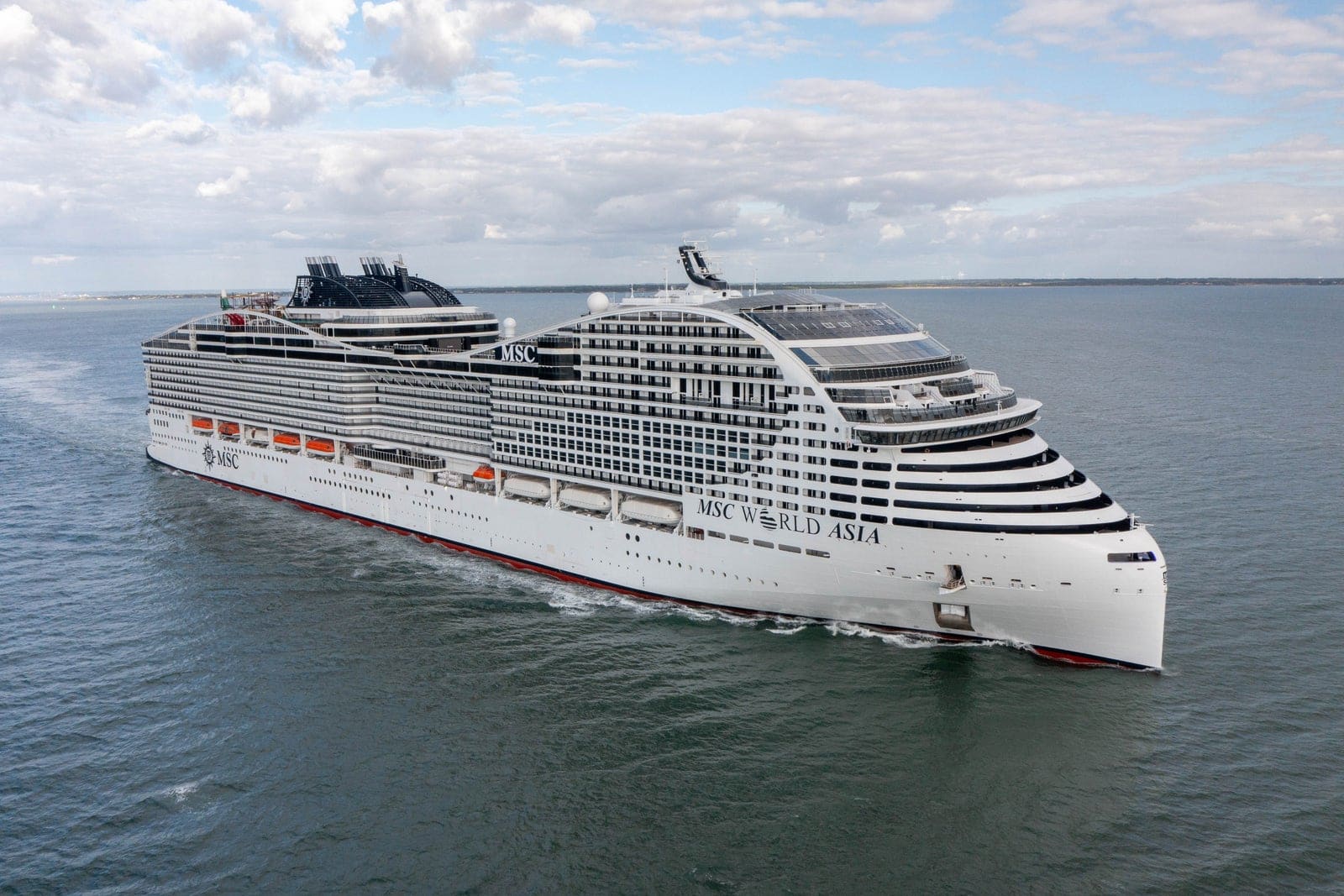
Testing Complete off the French Coast
MSC World Asia finished its final sea trials this week off France's western coastline, marking the last technical milestone before the ship enters service. The tests covered engine performance, manoeuvrability, fuel efficiency, safety systems, speed, and stopping distances, according to MSC Cruises.
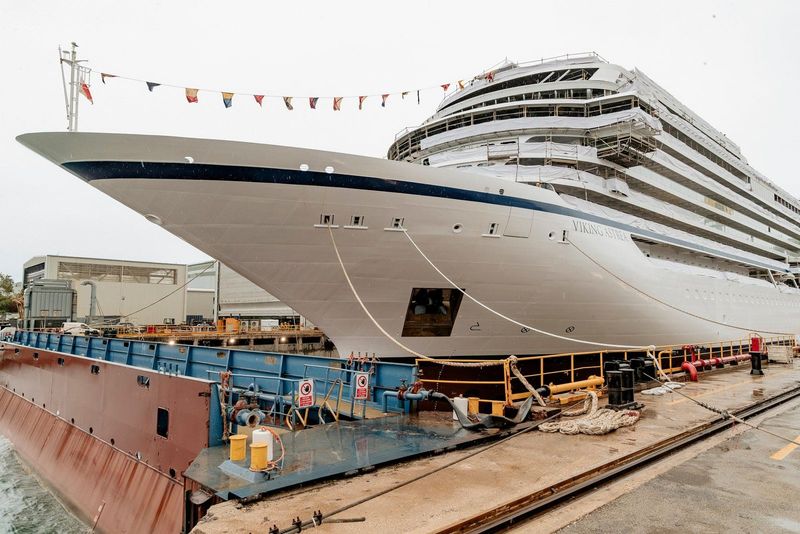
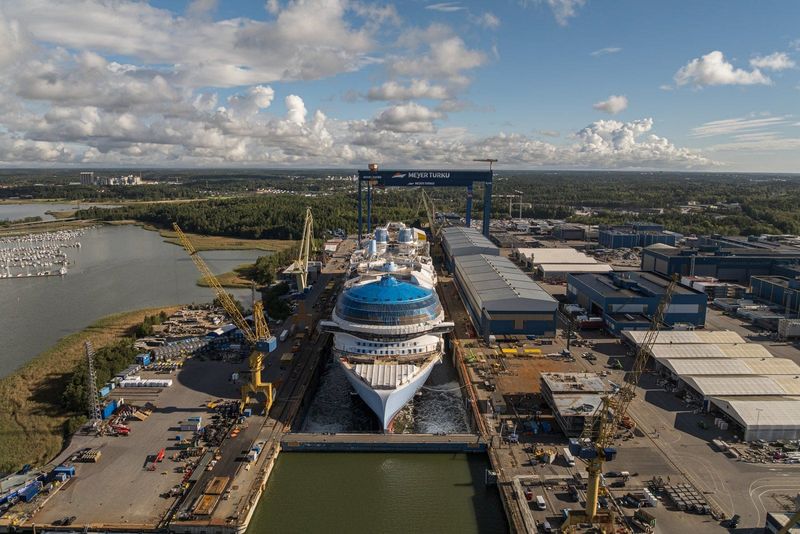
The vessel is now back at Chantiers de l'Atlantique shipyard in Saint-Nazaire for final interior work. MSC expects delivery on 25 November, with a christening ceremony scheduled for Le Havre shortly after.
This is the third ship in MSC's World class and the 24th overall in the company's fleet. Like its predecessors, MSC World Europa and MSC World America, it runs on liquefied natural gas, a fuel that produces lower sulphur and particulate emissions than traditional marine diesel. The shift to LNG reflects broader industry efforts to reduce the carbon intensity of large cruise operations, though the fuel still releases greenhouse gases and remains a transitional solution rather than a zero-emission one.
A Dragon and Seven Districts
The ship's signature design feature is a 12-metre-long, nine-metre-wide dragon sculpture suspended 10 metres above the World Promenade, a central thoroughfare that runs through the vessel. MSC has positioned the dragon as a nod to Asian cultural motifs, though the ship will spend its inaugural season in European waters.
MSC World Asia is organised into seven themed districts: Family Aventura, Zen Area, Aqua Deck, The Terraces, Galleria, Promenade, and the MSC Yacht Club, a suite-only area with dedicated facilities. Each district is designed to segment the ship's 6,782-passenger capacity into smaller experiential zones, a layout MSC introduced with the World class to avoid the feel of a single, undifferentiated mega-ship.
The Harbour, an outdoor park first seen on MSC World America, returns here with the Cliffhanger swing ride, which extends 50 metres beyond the ship's edge. The ship also carries what MSC describes as the longest dry slide at sea: The Spiral at Tree of Life, stretching 81.3 metres and spanning 12 decks.
Dining, Bars, and a Bespoke Beer
Forty bars, lounges, and restaurants are spread across the ship. Among them is a Clubhouse and Soda Bar themed around the 1980s and 1990s, and a Pan Asian Bar offering street-food-inspired cocktails. MSC has also brewed a draught beer exclusively for the ship, called Oceanic Asian, though details on the brewing partner or style have not been disclosed.
The variety reflects MSC's strategy of catering to a broad international market, particularly families and multi-generational groups. The World-class ships are designed to appeal across age groups, with dedicated kids' clubs, adults-only zones, and mid-tier dining that sits between buffet and specialty restaurant.
Mediterranean Deployment and Pricing
Once delivered, MSC World Asia will operate seven-night Mediterranean itineraries. Ports of call include Barcelona, Marseille, Genoa, Messina, and Valletta, covering Spain, France, Italy, Sicily, and Malta. The route is one of the most established in European cruising, drawing both first-time cruisers and repeat guests.
MSC has set starting prices at £630 per person for these sailings. That figure likely reflects an inside cabin in low season and does not include gratuities, drinks packages, or shore excursions, which can add significantly to the total cost. For context, seven-night Mediterranean cruises on comparable ships from other lines typically start in a similar range, though final costs vary widely depending on cabin type, season, and onboard spending.
The ship's deployment in the Mediterranean, rather than Asia, may seem counterintuitive given its name and design elements. However, MSC tends to position its newest ships on high-demand European routes before redeploying them to other regions. The Mediterranean remains one of the most profitable cruise markets globally, with strong demand from European and North American passengers.
LNG and the Fleet's Environmental Profile
The use of liquefied natural gas is a central part of MSC's environmental messaging. LNG combustion eliminates most sulphur oxide and particulate matter emissions and reduces nitrogen oxides compared to heavy fuel oil. However, methane slip during combustion and distribution remains a concern, as methane is a potent greenhouse gas. The overall climate benefit of LNG depends on how much methane leaks and how the gas is sourced.
MSC has committed to achieving net-zero greenhouse gas emissions by 2050, in line with International Maritime Organisation targets. The company is also testing other technologies, including fuel cells and carbon capture, on some vessels. Still, LNG-powered ships like MSC World Asia represent the current state of the art for large cruise newbuilds, rather than a long-term solution.
What It Means for Cruise Capacity
Adding a 6,782-passenger ship to the Mediterranean in peak season increases overall capacity on the route, which could put downward pressure on pricing or push lines to differentiate more aggressively on itinerary and experience. MSC has grown rapidly over the past decade, moving from a mid-tier regional line to one of the largest cruise operators globally. The World-class ships are the most visible symbol of that ambition.
For passengers, more capacity generally means more choice and, in some cases, better deals. For ports, it means higher volumes and the logistical and environmental pressures that come with them. Cities like Barcelona and Venice have already imposed limits on cruise traffic, and other ports may follow as the industry continues to expand.