Record Numbers, Unequal Access
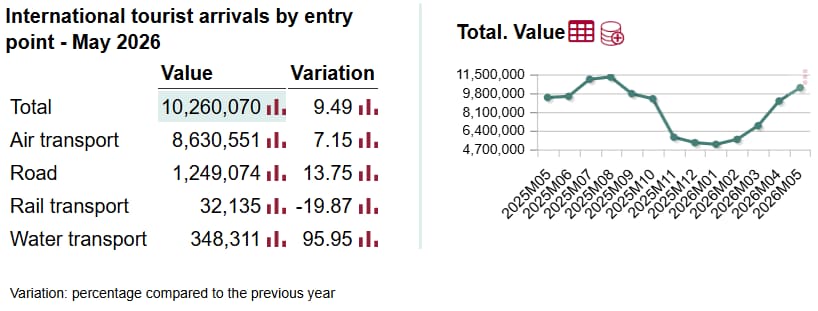
Spain is expecting 43 million visitors between June and September 2026, with spending projected to reach 64 billion euros during those three months alone. Tourism accounts for roughly 13 percent of the country's GDP, according to the National Statistics Institute, or as much as 16 percent when indirect revenues are included.
But the same government institute that tracks arrivals has published figures showing that 32.2 percent of Spaniards did not take even a week's holiday in 2025. Another 27 percent have no vacation plans for this summer.
The gap between a thriving tourism sector and residents unable to afford their own getaways is not merely a statistical quirk. It reflects deeper economic pressures that have fueled protests and policy crackdowns across the country.
The Cost of a Week Away
A basic domestic trip, typically visiting family or a hometown, starts at around 665 euros, according to the Spanish Organisation of Consumers and Users. Beach holidays average 1,555 euros. Foreign vacations require an outlay of 2,327 euros, sums that Ileana Izverniceanu, communications director at the organization, describes as "simply unaffordable" for many households.
Izverniceanu notes that the issue goes beyond airfare or fuel surcharges linked to Middle East tensions. "The fact that one in three Spaniards cannot go on holiday this summer is not an isolated event, but the reflection of an economic reality," she told Euronews.
The organization's Family Solvency Index remains below pre-pandemic levels, suggesting that even as official economic indicators improve, many families do not feel the recovery in day-to-day life.
Housing, Energy, and Everyday Strain
The tourism sector's success has collided with a housing crisis in many Spanish cities and coastal towns. Short-term rental platforms have drawn repeated criticism for removing long-term housing stock, pushing up rents and making it harder for residents to stay in their own neighborhoods.
Anti-tourism demonstrations have erupted in Barcelona, Mallorca, and other popular destinations, with residents citing rising living costs and the sense that local needs are being sidelined in favor of visitor infrastructure.
Energy and food prices have also squeezed household budgets. The consumer group's data shows families adjusting their travel habits in response, opting for shorter trips, staying closer to home, and cutting leisure spending.
A Call for Balance
Foreign visitor spending is expected to rise by 10 percent compared to last year, according to the Ministry of Industry and Tourism. That growth underscores the sector's importance to the national economy, but it also highlights the imbalance.
The Spanish Organisation of Consumers and Users is calling for measures to ease the cost of living, particularly in energy, food, and housing, so that residents benefit alongside the industry. Without such adjustments, the organization argues, the economic gains from tourism risk deepening social divisions.
The tension is not unique to Spain, but the scale of its tourism industry makes the contrast especially stark. Millions arrive each summer to enjoy the country's beaches, cities, and culture. Meanwhile, a significant share of the population watches from the sidelines, unable to afford the same experience in their own country or elsewhere.