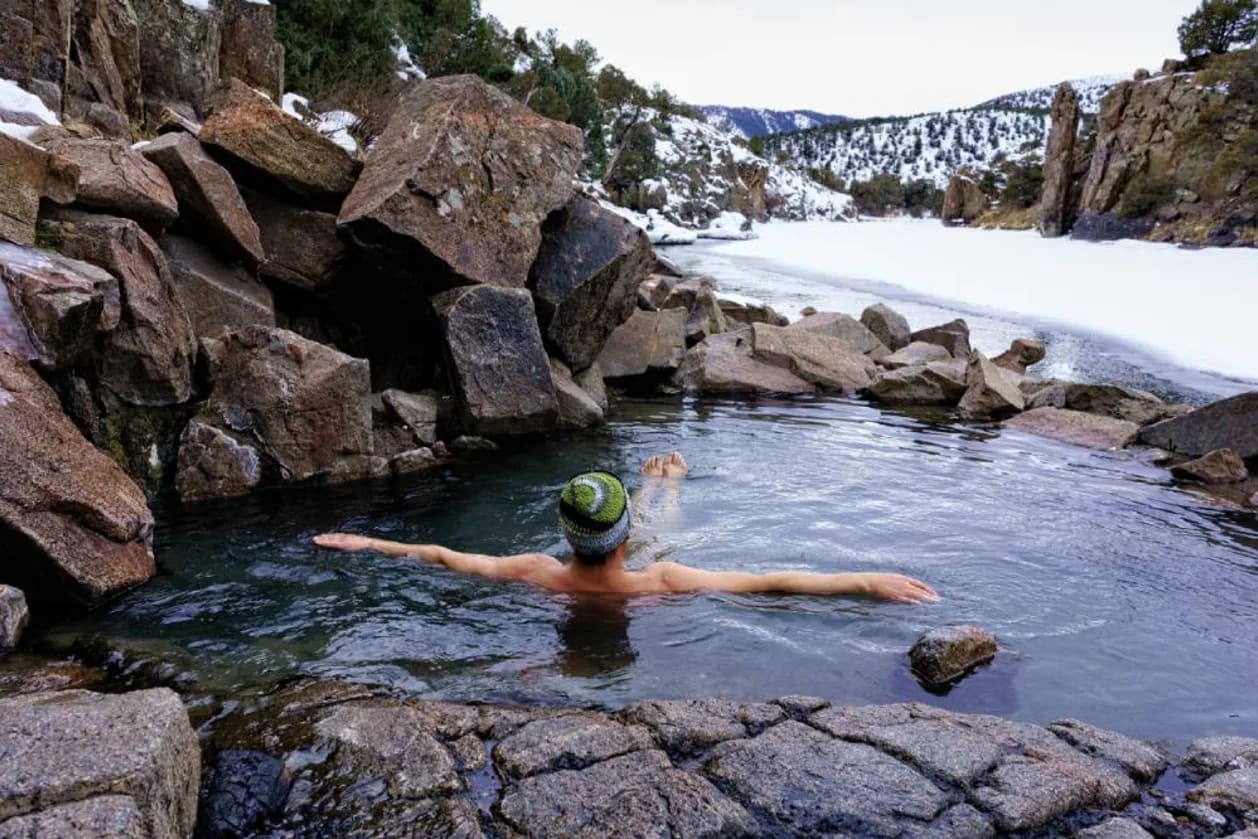
A Pendulum Swing in Wellness Travel
The wellness world spent the better part of a decade evangelizing ice baths. Influencers filmed themselves gasping in freezing tubs, biohackers extolled dopamine spikes, and boutique studios installed cryotherapy chambers. Now the pendulum is swinging back. Travelers are choosing warmth over shock, and thermal springs are filling up again.
The practice itself carries no mystery. People lower themselves into naturally heated water that rises from underground, warmed by geothermal heat or proximity to magma. Rain and snowmelt seep through rock, heat up deep below the surface, then resurface as springs. The deeper the journey, the hotter the return. Near volcanic zones, the process runs even hotter, which explains why bathers in Iceland and the Austrian Alps can soak outdoors in winter without freezing.
This behavior is ancient. Greeks soaked in sulfur springs for skin ailments and joint pain; Hippocrates and Plato both endorsed the habit. Rome industrialized the concept with vast public bathhouses. The Victorians called it taking the waters. We call it hot potting, and it is having a resurgence.
What the Evidence Actually Says
Health claims around thermal bathing remain inconsistent. Each spring carries a different mineral profile and temperature, so sweeping statements about benefits fall apart quickly. A few outcomes do show up reliably in research.
Stress drops. Immersion in warm water lowers cortisol and calms the nervous system. The heat also loosens tight muscles and eases joint stiffness, which is why physical therapists have long recommended warm soaks for recovery.
Skin conditions may improve. Some studies link mineral-rich water to relief from psoriasis and dermatitis, though the evidence remains thin and inconsistent. Circulation gets a modest boost. Warm water immersion has been associated with improved blood flow and slight reductions in blood pressure, according to a handful of small studies.
Detox claims, however, belong in the marketing file. The body already has organs for that. Mostly, thermal bathing delivers something simpler and more immediate: it feels good. That alone justifies the trip.
A few precautions apply. Avoid springs that run dangerously hot, especially in remote backcountry settings where water temperatures are unregulated. Keep soaks short and exit immediately if you feel lightheaded. Pregnant travelers and anyone with cardiovascular conditions should consult a doctor before booking. This is not medical advice, just common sense.
Eight Springs Worth the Detour
Castle Hot Springs, Arizona
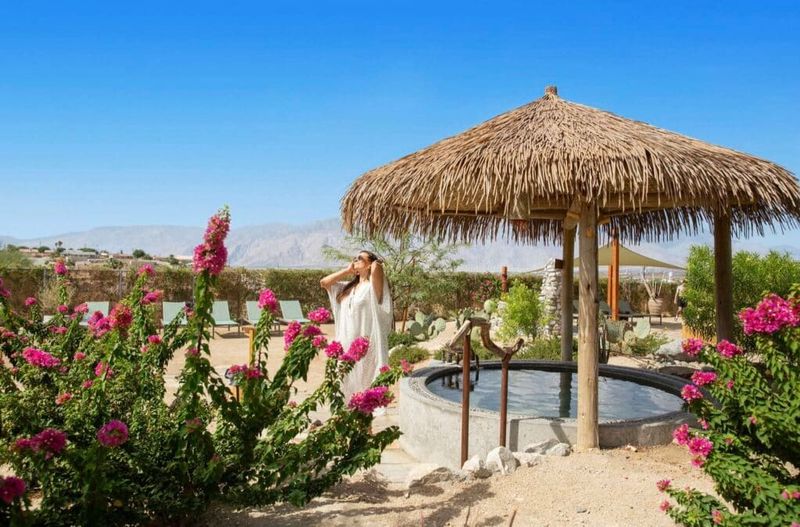
An hour north of Phoenix, spring-fed pools cascade through a desert canyon lined with palms. The site attracted wealthy families in the 1890s, and the all-inclusive resort now keeps the springs exclusively for overnight guests. The mineral water here contains unusually high levels of lithium and magnesium. Days are filled with desert hiking and farm-to-table meals; nights end with long soaks under exceptionally dark skies. Rooms book out months ahead, so advance planning is essential. Castle Hot Springs operates as an adults-only, all-inclusive property.
Thermae Bath Spa, England
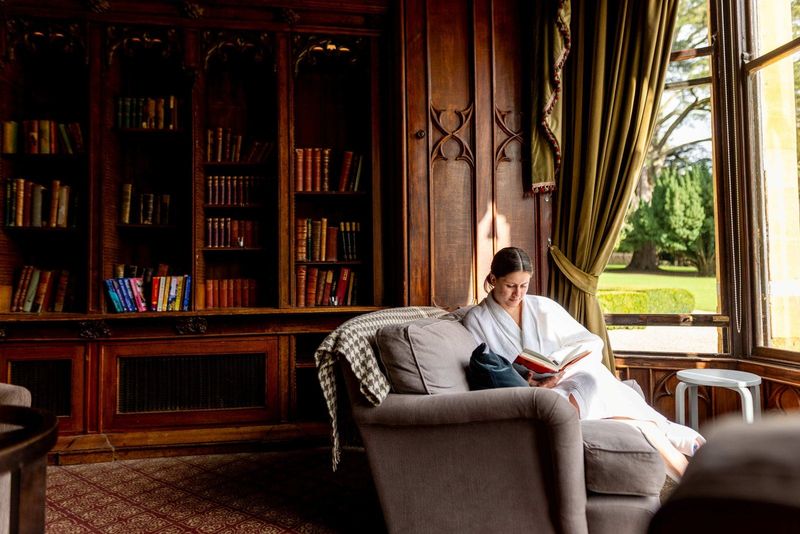
Britain has one natural thermal source, and it surfaces in Bath, a Georgian city two hours west of London. Thermae Bath Spa places its open-air rooftop pool directly above the city center. Bathers float in warm mineral water while the abbey rises below. Sessions are open to the public. The Roman Baths next door offer historical context. The Gainsborough is the only hotel in the UK with direct access to the thermal source; other townhouse hotels in Bath sit within walking distance.
Sky Lagoon, Iceland
Iceland has made soaking a national pastime. Sky Lagoon sits on the edge of Reykjavik, with an infinity edge that drops toward the North Atlantic. Waves crash just beyond the rim while bathers float in geothermal warmth. A seven-step ritual alternates between heat and cold. The location, ten minutes from downtown, makes it easy to fold into a city itinerary. Reykjavik's design-focused hotels are nearby.
Two Bunch Palms, California
Hidden in a palm grove near Desert Hot Springs, Two Bunch Palms has drawn Hollywood escapees and rumored mobsters since the 1940s. The lithium-rich mineral water is roughly 600 years old and feeds multiple pools scattered across the property. The standout is the Grotto, two carved stone pools beneath a canopy of tamarisk trees. One runs at 104°F, the other slightly cooler. Midnight soaks under resident white owls are a draw. The vibe is bohemian and adults-only. Day passes are available for the Grotto, or book a room on site.
The Springs Resort, Colorado
Pagosa Springs in Colorado offers more than forty mineral pools terraced along the San Juan River. The Springs Resort taps into the Mother Spring, recognized as the world's deepest geothermal source. Bathers move from pool to pool as the river rushes past. The resort consistently ranks high among US thermal destinations. Rooms are steps from the pools, and day passes are sold to non-guests.
Aqua Dome, Austria
In the Ötztal Valley of Tyrol, Aqua Dome resembles a spaceship more than a traditional spa. Three glowing, bowl-shaped pools hover above the valley floor, each filled with warm sulfurous water and ringed by peaks over three thousand meters. The thermal spring here has been in use since the 1500s. A dozen additional pools and an extensive sauna complex round out the facility. Day tickets are available. The attached four-star hotel connects to the spa via a heated corridor designed for guests in robes.
Pamukkale and Hierapolis, Turkey
Pamukkale's white travertine terraces cascade down a hillside like frozen waterfalls, each tier holding a shallow pool of turquoise water. The name translates to cotton castle. Above the terraces, the ruins of Hierapolis, an ancient spa city, crown the ridge. Visitors walk the warm terraces barefoot and soak among toppled Roman columns in Cleopatra's Antique Pool, which holds steady at 36°C. Sections of the terraces rotate closures to allow recovery. Thermal hotels in the town of Pamukkale sit a short walk from the gates.
Bagno Vignoni, Italy
Saturnia draws crowds. Bagno Vignoni does not. This tiny Val d'Orcia village is built around a steaming thermal pool in its central piazza. Etruscans soaked here, as did Saint Catherine of Siena. The spring surfaces at 50°C and flows into a five-star spa resort uphill. Outdoor pools maintain the water at 36°C against a backdrop of cypress trees and rolling hills. Adler Spa Resort Thermae draws from the same spring and offers vineyard hikes and regional cuisine.
The Appeal of Doing Less
Thermal bathing asks very little of the traveler. No endurance test, no performance metric, no breathwork protocol. Just warmth, stillness, and time. In a wellness landscape increasingly dominated by optimization and measurable outcomes, that simplicity is part of the appeal. The cold plunge had its moment. Warm water is having its own.