An Unlikely Place to Stay
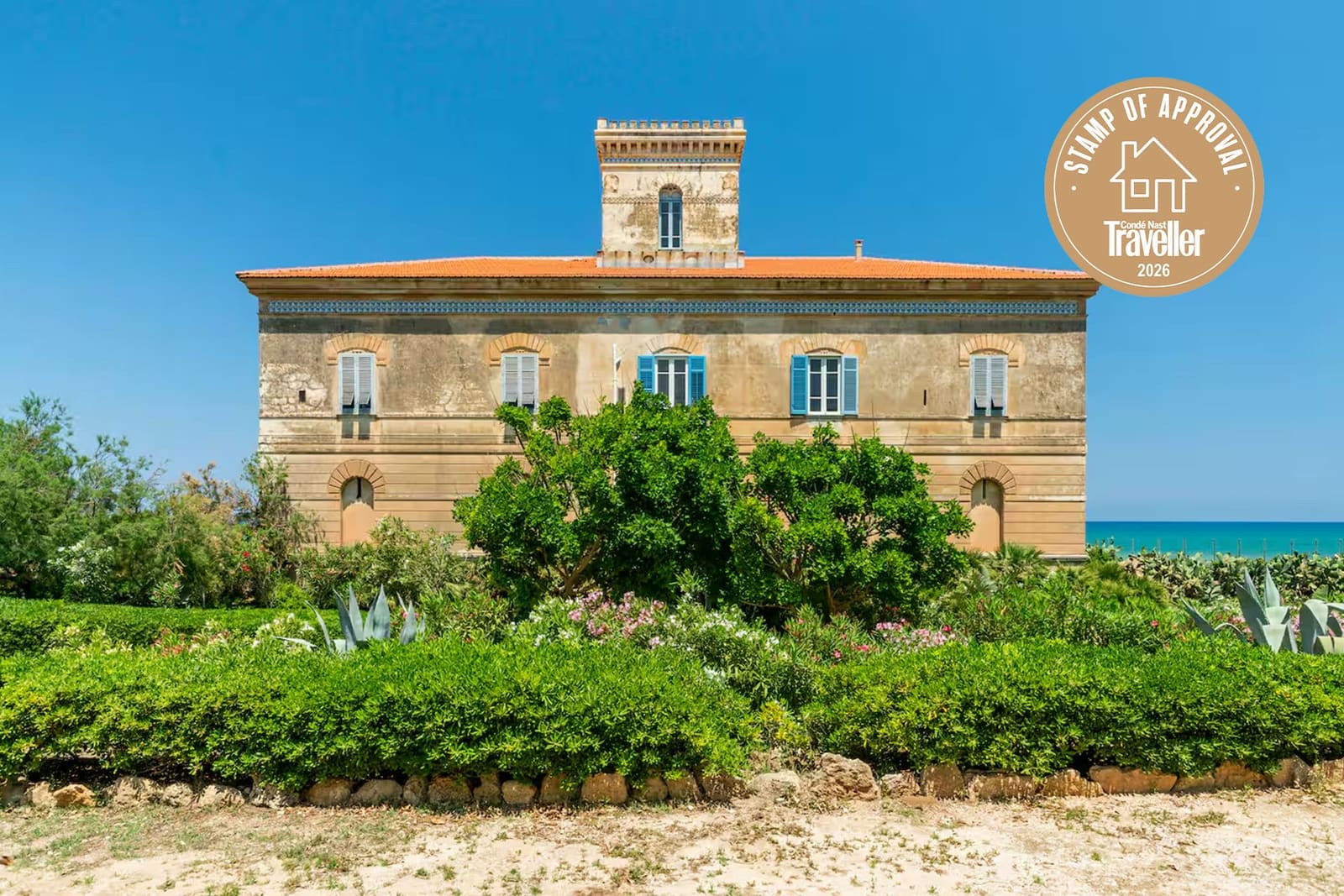
On a remote stretch of Sicily's Alcamo coastline sits a golden-stone building that looks like it wandered out of another era. Built in 1913 as a tuna fishery headquarters, Tonnara Foderà di Magazzinazzi rises three stories from the beach, crowned by a watchtower that once tracked fishing boats across the Mediterranean. The building's history is written in its bones, but the bright blue shutters against terracotta tiles hint at something more playful.
This area has been tied to tuna fishing for centuries. Fisherman dwellings from the 1600s still dot the coastline. By the late 1800s, a prominent Sicilian family had built an empire here, operating multiple fisheries that thrived until the 1960s. This Art Nouveau villa served as their nerve center, combining storage facilities, family quarters, offices, and that distinctive watchtower.
Six generations later, the building remains in the same family. Rather than let it crumble, the current owners, Leonardo and Rosa Maria, have turned it into a guest house that blurs the line between private rental and shared residence.
Not Quite a Hotel, Not Quite an Airbnb
The couple is clear from the start: this is not a hotel. There is no daily housekeeping, no breakfast service, no front desk. What you get instead is access to a historic building with four guest rooms and shared spaces including a kitchen, dining room, and lounge.
The setup takes some mental adjustment. You are not renting the entire house, but you are encouraged to treat the common areas as your own. It is somewhere between a traditional bed and breakfast and a private villa rental, a format that works once you settle into the rhythm.
Each of the four accommodations functions more like a small apartment. One spans two bedrooms, another includes a kitchenette, and the largest has a living room. The ground floor features soaring ceilings and flagstone floors, while the heart of the property lives on the floor above.
The shared kitchen is painted in shades of pink and mauve, lined with vintage dressers stacked with silverware, old milk jugs, and wooden cutting boards. Countertops hold jars of fruit and crates of fresh vegetables. The living room opens through French doors onto a view of the water, furnished with worn velvet sofas and collected objects: a miniature sailboat on the wall, a marble plinth piled with seashells.
Sleeping in the Watchtower
The watchtower room sits at the top of the building, reached by a narrow staircase that is not easy to navigate with luggage. Once you arrive, the wind becomes a constant presence, whistling through the walls and old window panes. The waves are close enough that you can hear them lap against the sand.
Inside, a vaulted ceiling holds a red Murano glass light. Blue paint swirls across door frames and alcoves, highlighting the building's quirks. An Art Deco headboard sits against century-old walls, a pattern repeated throughout the property: contemporary shapes and colors layered over historic features.
The room includes a small kitchenette and landing with a dining table, though the setup feels underused. One tap was not working, the cutlery showed signs of rust, and the whole arrangement had a makeshift quality. The bigger inconvenience is the bathroom, located a floor below. It is the most dated of the four rooms, small and windowless, requiring a late-night trek down the tower steps past other guests' doors.
A First-Floor Alternative
After two nights, a switch to one of the first-floor mini-apartments offered a more comfortable experience. Two large bedrooms connect to each other, with tall windows that throw open and ceilings filled with light. Even for a solo traveler, the space feels generous. Both bedrooms include day beds, chairs, writing desks, and wardrobes.
The checkerboard flooring and vintage details, framed film posters and mint-green bedside tables, give the rooms a lived-in charm. The bathroom is a highlight: deep red marble tile, a large tub, and a view over the beach. This side of the building faces the garden, so the sound of the sea fades, but the trade-off is worth it.
What is Nearby
The location is secluded. There are no houses nearby, just a stretch of sand and the sound of waves. A car is essential. The closest town, Castellammare del Golfo, is less than 10 minutes away. Restaurants line the marina, where you can sit with a drink and watch the boats. The main street, Corso Giuseppe Garibaldi, holds cafes, small shops, and bars. It is easy to spend a full day there, and at dusk, pink light fills the streets.
One standout nearby attraction is Tonnara di Scopello, another historic tuna fishery turned museum and protected cove. Day passes cost under 20 euros and include access to the museum and the cove itself. The water is vivid aqua, crashing around a craggy coastline where deck chairs line the edge. A ticket includes a seat for the day, with a cafe serving Campari spritzes and octopus salad. In early May, the site was under capacity, but social media attention is driving more visitors, so booking in advance is wise.
The hilltop town of Erice offers another day trip. The medieval fortress is more than 2,500 years old, perched 2,464 feet above sea level. The drive up the winding mountain road is challenging, but the views reward the effort. Parking is available at the top, or you can take a cable car. The town holds ancient churches, cobblestone streets, gelato shops, and a famous pastry shop. Castello di Venere, a 12th-century castle clinging to the cliffside, looks like something from a fantasy series. Three to five hours is enough time to explore and have lunch, but bring a jacket. Even on a warm day elsewhere, the wind at that altitude cuts through.
Palermo's city center is only 30 minutes away, adding another layer of accessibility to what feels like an isolated location.
The Appeal of Staying Put
Despite the options, the pull of the property itself is strong. The building sits on a quiet beach with little around it, a leftover from the days when tuna tycoons controlled the coast. There is a family-run pizzeria next door. Grabbing takeaway and sitting on the sand as the sky turns purple is an easy way to spend an evening.
The experience here is about accepting the building's quirks: the outdated bathroom in the tower, the slightly rusty kitchenette, the arrangement that is neither fully private nor fully communal. In exchange, you get a slice of Sicilian history, a building that has been in one family for six generations, and a location where the only constant sound is the sea.
It is not polished. It is not luxury. But for travelers looking for something that feels less like a curated experience and more like stumbling into a story already in progress, it offers exactly that.