A Landmark Shift for the Emirates
When Wynn Al Marjan Island opens its doors in September 2027, visitors will find something unprecedented in the UAE: a fully licensed casino. The 60-hectare resort on an Arabian Gulf island marks the first time the country has permitted commercial gaming, a notable departure for a nation that has long prohibited gambling outright.
Wynn Resorts announced the September 2027 opening date for the $5.1 billion project, which received the UAE's first commercial gaming operator license in October 2024. That license came after the General Commercial Gaming Regulatory Authority was established in 2023 to create a legal framework for regulated gaming, according to Wynn Resorts. The move reflects a broader recalibration of how the UAE positions itself in the global tourism market, expanding beyond the shopping malls and skyscrapers that have defined Dubai's brand for decades.
Ras Al Khaimah, the northernmost of the seven emirates, sits roughly 80 kilometers from Dubai International Airport. It has been building out its tourism infrastructure for years, emphasizing beaches, mountain terrain, and outdoor activities rather than competing directly with Dubai's urban spectacle. The Wynn property adds a different kind of draw: a large-scale entertainment complex that bundles accommodation, dining, retail, and gaming in a single destination.
What the Resort Offers
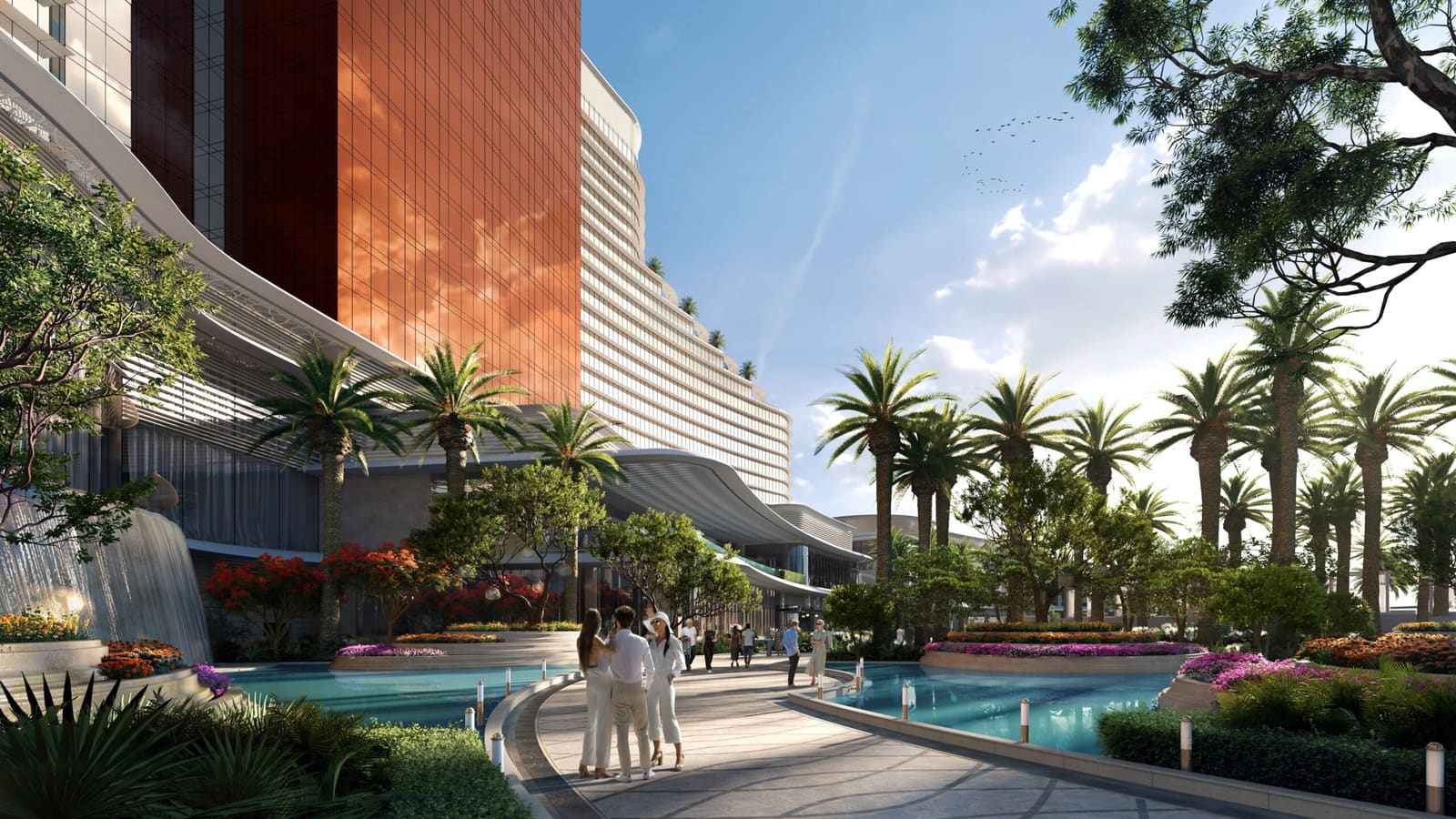
The development will include more than 1,500 rooms, suites, and residences, along with 22 restaurants, bars, and lounges. Some concepts are imports from Wynn's Las Vegas portfolio, including Delilah, an entertainment dining venue, while others are new collaborations, such as a steakhouse created with French chef Alain Ducasse, according to Wynn Resorts.
Beyond the casino floor, the resort features a 900-seat theater, a 15,000-square-meter retail promenade, and a 420-meter private beach. Twelve swimming pools, a spa, a beach club, and a marina capable of accommodating superyachts round out the leisure facilities. Event spaces are designed to host conferences and large gatherings, aiming to pull in both leisure travelers and business groups.
The sheer scale of the project reflects a broader industry trend: integrated resorts that give visitors multiple reasons to stay on-site for days at a time. Las Vegas and Macau pioneered the model; now the Gulf is testing whether it can replicate that formula in a market where gaming has historically been off-limits.
Delays and Cost Overruns
Construction has not been entirely smooth. Wynn Resorts CEO Craig Billings disclosed a "modest delay" caused by logistical and shipping challenges tied to regional conflicts and supply chain disruptions. Those issues added an estimated $600 million to the project's cost, bringing the total to $5.1 billion, according to Wynn Resorts.
Despite the setbacks, the 70-story tower has reached its highest structural point, and interior work is underway across the property. The company maintains that the resort will be ready for its September 2027 debut.
Cost increases and schedule slippage are common in mega-projects, especially in regions where infrastructure and labor markets are under pressure. The question for Wynn is whether the added expense will be justified by visitor demand once the resort opens.
Ras Al Khaimah's Broader Ambitions
The emirate has been investing heavily in luxury accommodation and tourism infrastructure, seeking to carve out its own identity rather than ride Dubai's coattails. Its pitch centers on natural assets: white-sand beaches, the Hajar Mountains, and a quieter pace compared to the frenetic energy of its southern neighbor.
Wynn Al Marjan Island fits into that strategy by offering a high-end destination that does not replicate what Dubai already provides. Future transport improvements, including a planned bridge connection and proposed flying taxi services between Ras Al Khaimah and Dubai, could make the emirate more accessible for international visitors who fly into Dubai but want to spend time elsewhere in the country.
Whether the gaming component will prove a decisive draw remains to be seen. Some travelers will be attracted by the novelty of legal casino gaming in a country that has never permitted it. Others may be more interested in the beaches, dining, and entertainment, treating the casino as an add-on rather than the main event.
Regional Context
The UAE is not the only Gulf state exploring gaming. Saudi Arabia has hinted at openness to entertainment complexes that might include gaming, though no concrete plans have been announced. The broader trend in the region is diversification: governments are investing in tourism, entertainment, and hospitality to reduce reliance on oil revenue and create new economic engines.
For Ras Al Khaimah, the Wynn project represents a bet that the emirate can attract a slice of the global luxury travel market by offering something different from what Dubai and Abu Dhabi provide. The success of that bet will depend on execution, marketing, and whether the combination of gaming, hospitality, and entertainment resonates with enough visitors to justify the investment.
The September 2027 opening will provide the first real test.