A Billion-Dollar Bet Begins to Show Results
Saudi Arabia recorded a 67% increase in international arrivals between 2019 and 2025, the sharpest climb of any country tracked in the latest OECD tourism report. Around 30 million visitors entered the kingdom last year, a figure that reflects years of deliberate investment in infrastructure, visa liberalization, and event-driven tourism as part of the Vision 2030 economic plan.
The growth is real, but context matters. The kingdom still has a long way to go if it intends to hit its stated target of 150 million domestic and international visitors annually by decade's end. That would require roughly quintupling current numbers in five years, an ambitious timeline even with continued momentum.
Religious Tourism No Longer Dominates
For the first time on record, non-religious visits accounted for 52% of Saudi Arabia's international arrivals in 2025, up from 44% in 2019. The shift suggests that efforts to diversify beyond Hajj and Umrah pilgrimage are beginning to take hold, though pilgrimage traffic remains substantial.
Makkah Province, which includes Mecca and the coastal gateway city of Jeddah, drew 22.5 million visitors last year. That figure captures all arrivals through Jeddah's airport, not solely those traveling for religious purposes, so it cannot be read as a pure pilgrimage count. Still, the broader trend is clear: leisure, business, and cultural travel are rising as a share of the total.
Around 65% of the kingdom's 29.3 million international visitors in 2025 came from Muslim-majority countries, led by Egypt, Pakistan, Indonesia, and Gulf Cooperation Council states. The remaining third represents a growing segment of travelers from Europe, Asia, and elsewhere, drawn by new resorts, heritage sites, and large-scale entertainment events.
Who Else Grew, and Who Fell Behind
Morocco ranked second globally with a 53% increase in arrivals compared to 2019, followed by Egypt at 47%, Brazil at 46%, and Colombia at 45%. Japan posted a 34% gain, benefiting from the yen's weakness and pent-up demand from neighboring markets.
Three European countries rounded out the top ten: Norway, up 28%; Serbia, up 27%; and Denmark, up 22%. Portugal, Spain, and France also recorded notable gains, though they fell outside the leading group.
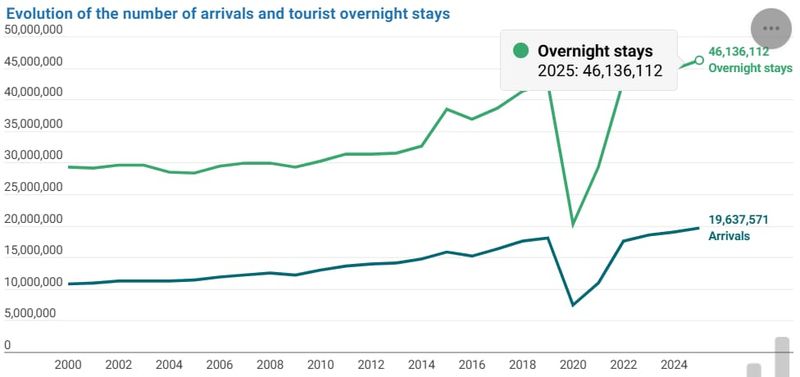
Across the 53 countries analyzed in the OECD report, international tourism grew by 4% compared to 2019 levels, reaching roughly 1.5 billion cross-border arrivals in 2025. That marks a broad recovery, but the picture is uneven.
Israel saw the steepest decline, with arrivals down 71% from 2019. The collapse followed the October 2023 Hamas attack and subsequent regional conflict. Before the war, Israel had been on track for one of its strongest tourism years since the pandemic, welcoming 3.2 million visitors in the first nine months of 2023 alone.
Ireland recorded the second-largest drop, down 32%, attributed to rising costs, reduced hotel capacity, weaker demand from key markets, and lingering Brexit effects. Argentina fell 23%, while the United States dropped 14% and Canada 11%. Germany and Italy remained 6% and 5% below their pre-pandemic totals, respectively.
In Asia-Pacific, Thailand logged a 17% decline, followed by New Zealand at 9%, Australia at 6%, and Indonesia at 4%. Peru's arrivals were down 22%, reflecting prolonged political and economic uncertainty.
What the Numbers Actually Mean
The OECD data, drawn from its 2026 Tourism Trends and Policies report, compares 2025 arrivals against the 2019 baseline. It offers a snapshot of which destinations have bounced back and which have not, but it does not explain why. Policy changes, currency fluctuations, safety perceptions, and infrastructure bottlenecks all play a role, and those factors vary widely by country.
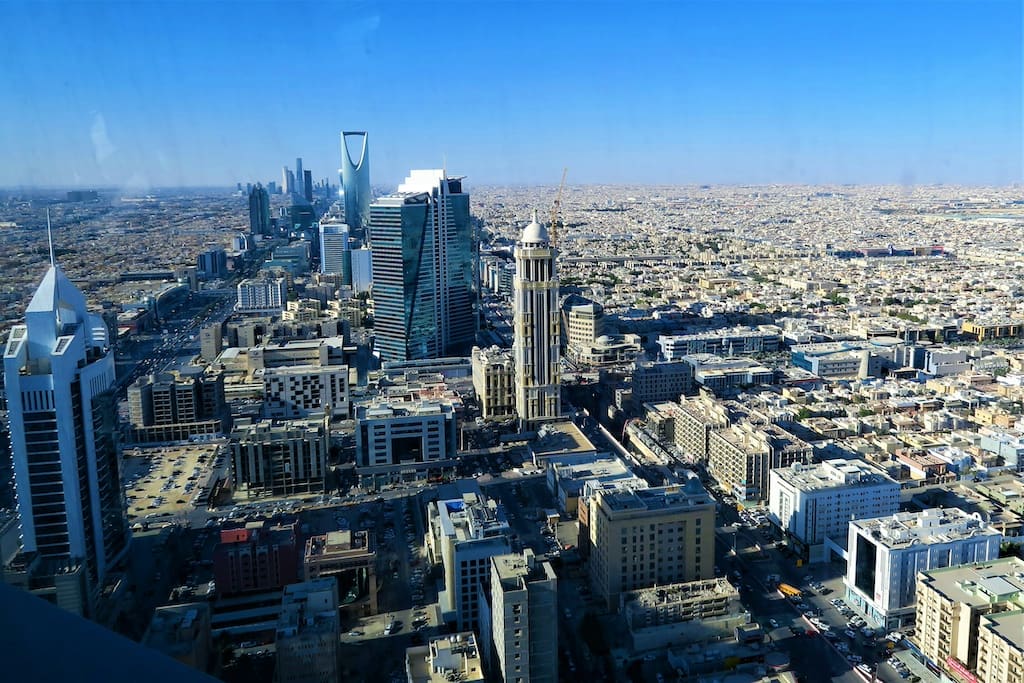
Saudi Arabia's gains are tied to specific decisions: simplified e-visa access for dozens of nationalities, expanded capacity at Saudia and new low-cost carriers, and billions spent on Red Sea resorts, heritage restoration in AlUla, and entertainment districts in Riyadh and Jeddah. Whether that investment translates into sustained growth will depend on execution, visitor satisfaction, and the kingdom's ability to manage both religious and leisure traffic without overwhelming its still-developing hospitality sector.
The report confirms that global tourism has largely recovered in aggregate terms, but the recovery is far from uniform. Some destinations are thriving, others are treading water, and a few remain well below where they stood six years ago.