A New Setting for an Old Tongue
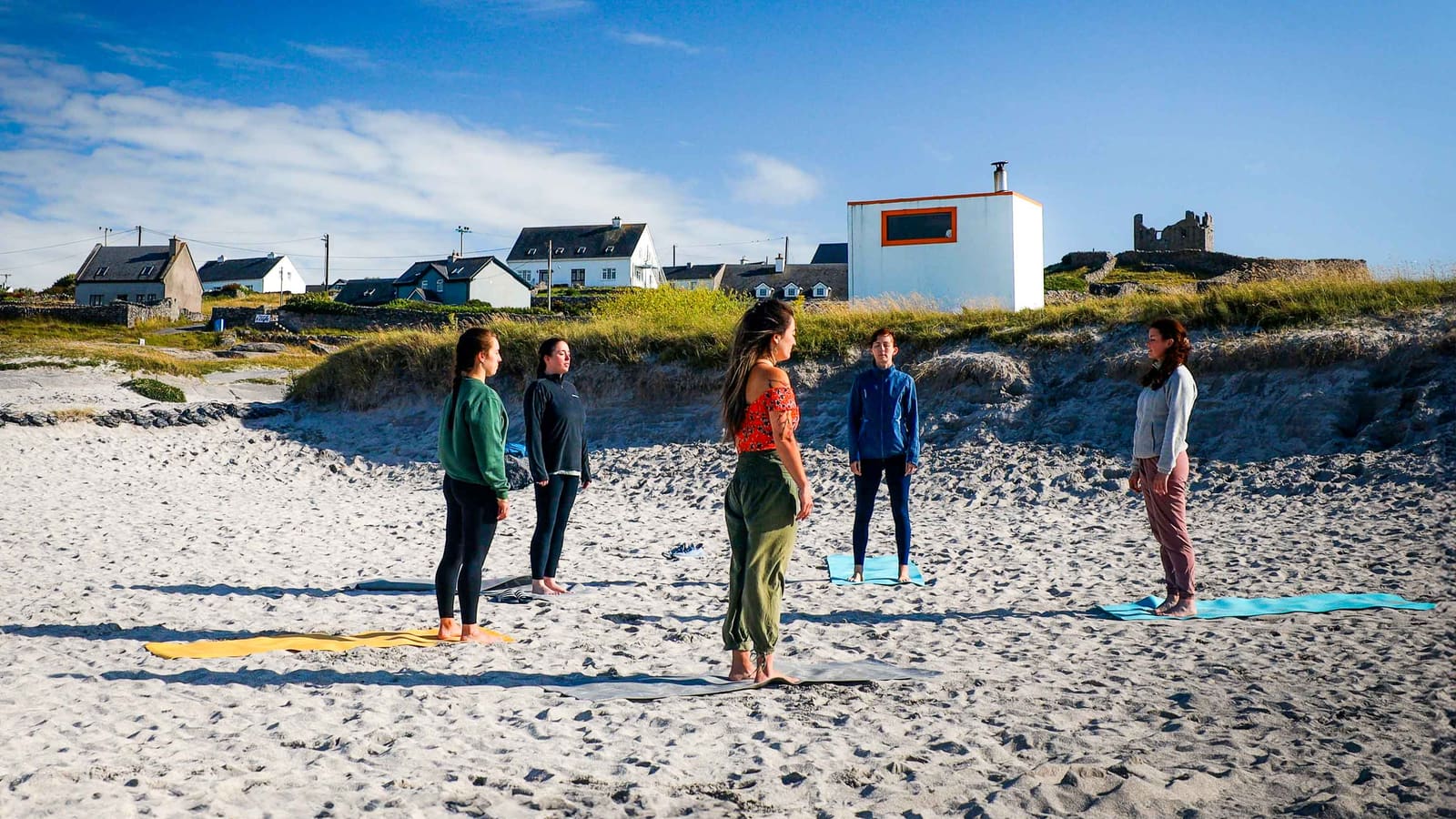
The Irish language is finding its way back into daily life, one yoga mat at a time. Éalú Aran, a retreat on the Aran Islands, is part of a growing movement across Ireland that teaches Gaeilge not in rigid classrooms but through wellness experiences - yoga sessions, walking meditations, cooking workshops. The approach sidesteps the formality that turned off many Irish learners in school and instead embeds the language in relaxed, embodied settings.
For decades, Irish Gaelic has occupied an awkward space in Irish culture: mandatory in schools, honored in official policy, yet rarely spoken in everyday conversation outside a few pockets in the west. Compulsory education produced generations who could conjugate verbs but felt little emotional connection to the language. Now, retreats like Éalú Aran are betting that context and atmosphere matter as much as grammar drills.
Learning Through Presence, Not Textbooks
At these retreats, participants might start the day with a yoga flow guided entirely in Irish, follow it with a breakfast where menu items and conversation prompts are in Gaeilge, then spend an afternoon foraging or crafting while instructors weave in vocabulary organically. The pedagogy is immersive but low-pressure. No one is tested. Mistakes are expected. The goal is fluency in feeling, not just syntax.
This model appeals to adults who left school with fragmentary Irish and a sense of obligation rather than curiosity. By pairing language learning with activities already associated with mindfulness and self-care, the retreats reframe Gaeilge as something restorative rather than remedial. The language becomes a tool for presence, a way to engage more deeply with the landscape and culture participants are already seeking out.
Why Informal Spaces Succeed Where Classrooms Struggled
Traditional language education in Ireland has long been criticized for prioritizing rote memorization and written exams over spoken fluency and cultural context. Many Irish adults report that years of compulsory Gaeilge left them able to pass tests but unable to hold a conversation. The emotional disconnect runs deep: the language felt like homework, not heritage.
Wellness retreats invert that dynamic. Participants choose to attend, often paying out of pocket, which means motivation is intrinsic. The settings - coastal islands, rural cottages, community halls - carry their own cultural weight. And the integration with yoga, meditation, or creative practice taps into a different kind of learning: embodied, associative, tied to memory and sensation rather than abstract rules.
There's also a social dimension. In a yoga studio or around a communal table, speaking haltingly in Irish feels less like failure and more like shared exploration. The vulnerability of learning becomes part of the retreat experience itself, not something to be hidden or graded.
A Broader Cultural Shift
Éalú Aran and similar programs are riding a wider wave of interest in Gaeilge among younger Irish adults and diaspora communities. Social media has played a role - Irish-language TikTok accounts, Instagram pages teaching daily phrases, podcasts blending music and conversation - all contribute to a sense that the language is living and evolving, not a museum piece.
This revival is also generational. Millennials and Gen Z learners, many of whom grew up with globalized English-language media, are now seeking out cultural anchors. Learning Irish becomes a way to claim identity, resist homogenization, and connect with place in an era of digital displacement. Wellness culture, with its emphasis on rootedness and ritual, aligns naturally with that impulse.
The Irish government has set a target of one million Irish speakers by 2030, a goal that will require efforts far beyond policy. Informal education - through retreats, community classes, arts programs - will likely be as important as school reform in reaching it.
What It Means for Language Preservation
Linguists have long argued that languages survive not through policy alone but through daily use and emotional investment. When a language is spoken only in formal settings - government offices, school exams - it becomes ceremonial, disconnected from the rhythms of ordinary life. Informal learning spaces help bridge that gap.
Retreats like Éalú Aran also serve a demographic that formal education often misses: adults who have time, resources, and motivation but no access to evening classes or immersion programs. By meeting learners where they are - literally and emotionally - these programs expand the pool of people who might carry the language forward.
There's a risk, of course, that wellness-adjacent language learning remains niche, accessible mainly to those who can afford weekend retreats. But the model itself is adaptable. Community centers, libraries, and local yoga studios are beginning to offer similar hybrid formats at lower cost, suggesting the approach can scale beyond boutique experiences.
The Language of Return
For many participants, learning Irish through wellness practice feels less like acquiring a new skill and more like recovering something lost. The language carries the cadence of grandparents' voices, the names of places that sound wrong in English, the texture of a culture that globalization has smoothed over. Returning to it in a space designed for reflection and care can be unexpectedly emotional.
That emotional dimension may be the retreats' greatest asset. Language revival is often framed in policy terms - speaker numbers, funding allocations, curriculum standards - but it ultimately depends on whether people feel a reason to speak. If yoga mats and coastal walks can create that feeling, they may prove as vital to Gaeilge's future as any classroom ever was.